Why I Built Worldsmith: Building Entire Round Worlds in Unity Shouldn’t Be This Hard
Worldsmith started because I wanted to build a game on a genuinely round world and discovered that generating the sphere was the easy part. Years of planetary maths, abandoned versions, vibe-coding disasters and rebuilding later, it is becoming something much bigger: a Unity framework designed to make entire playable spherical worlds practical.

There is a very big difference between making a sphere and making a world.
Unfortunately, I learned this after making the sphere.
At first it feels great.
You generate a round mesh in Unity.
You rotate around it.
You slap a material on it.
Maybe add some terrain variation.
You look at it for a few seconds.
Yep.
Planet.
Nice.
Then you try to actually make a game on the thing.
And suddenly the planet starts asking questions.
How does the player stand on it?
What is down?
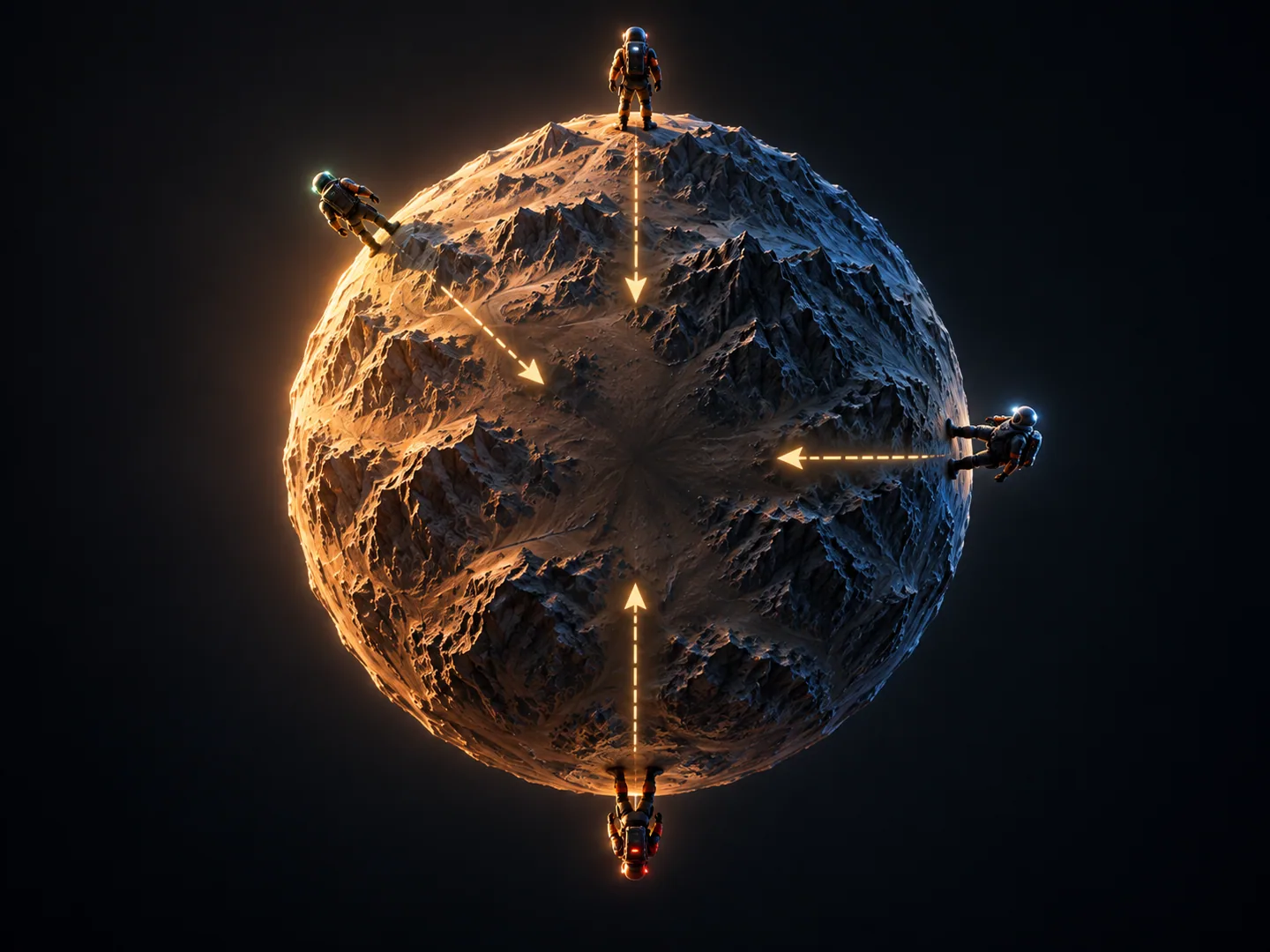
How does gravity work when two players can stand on opposite sides of the same world?
How do you stream terrain?
How do you keep the terrain detailed near the player without generating the entire planet at maximum resolution and setting your computer on fire?
What happens when the player travels thousands of kilometres from the origin?
How do trees know which way is up?
What about roads?
Buildings?
Water?
Fog?
Terrain deformation?
Saving?
Vegetation?
NPCs?
Settlements?
Weather?
Now imagine all of those systems politely assuming your world is flat.
And then floating-point precision eventually walks into the room carrying a baseball bat.

That is roughly how Worldsmith happened.
Worldsmith started as something I needed for myself.
That part matters.
I didn't sit down, browse the Asset Store, look for an empty category and say:
"Hmm. What can I sell?"
No.
I had a problem.
Actually, I had many problems.
They just hadn't introduced themselves yet.
Before Worldsmith, There Was World 001
This whole thing really goes back to World 001.
After I stopped working on World 001, the bigger idea behind the kind of worlds I wanted to create didn't leave with it.
I still had this picture in my head.
And I knew there would eventually be another project.
World 007.
I wanted something much bigger.
Not necessarily bigger because the terrain had to contain fifty billion polygons or because I wanted to make some ridiculous claim about having the largest game map ever made.
I mean bigger in the way the world worked.
I didn't want a giant flat level pretending the world continued somewhere beyond an invisible boundary.
I wanted to be able to move.
Keep moving.
Cross a region.
Cross another.
Travel around the world.
And eventually, if the scale and game allowed it, come back from the other side.
A world that is actually round.
Simple idea.
Very stupid amount of mathematics.
At that stage my ambition was honestly much further ahead than my ability to execute it.
And that became painful very quickly.
Because spherical worlds are one of those ideas that sound easy when you describe them in one sentence.
"The terrain is just wrapped around a sphere."
Right.
Sure.
Then you start.
Vectors.
Normals.
Tangents.
Cube faces.
Coordinate spaces.
Spherical projection.
Neighbour relationships.
LOD.
Seams.
Surface orientation.
Gravity direction.
Chunk streaming.
Floating-point precision.
You fix one problem and somehow geometry finds three more ways to insult you.
There were days where I would solve something, look at it working, feel brilliant for maybe fifteen minutes, and then discover that I had broken the opposite side of the planet.
Excellent.

Still, I kept going.
There were many points where quitting Worldsmith would have made complete sense.
The maths kept getting more advanced.
The idea kept getting larger.
My journey was already far longer than I expected when I started.
But I knew what I wanted.
More importantly, I knew why I wanted it.
I wanted this for my own process.
I wanted to eventually build World 007 without spending most of the development time fighting the planet itself.
So I couldn't really convince myself that the problem wasn't important.
It was important to me.
And that's usually where my most dangerous tool ideas begin.
Eventually, I Had a Planet
After a lot of work, Worldsmith reached a stage where it could generate the round terrain reasonably well.
And honestly, that felt like a huge achievement at the time.
The mesh worked.
The world was round.
I had lots of test setups.
Things were finally beginning to look like the original idea.
So naturally my brain ruined the celebration.
Because I looked at the planet and thought:
This can't be it, right?
I didn't do all of this just to generate a round mesh.
Now what?
I manually place everything?
Across a planet?
Are you serious?
Trees.
Grass.
Rocks.
Roads.
Settlements.
Structures.
Lakes.
Rivers.
Points of interest.
Gameplay locations.
Biomes.
Resources.
Cliffs.
Everything.
Manually?
Imagine populating a full planet by hand.
Even a relatively small one.
Now imagine changing your mind.
Now imagine making another planet.
At some point I basically reached:
Fuck this shit.
Seriously.
If I still have to manually build almost everything after generating the world, then what exactly have I saved?
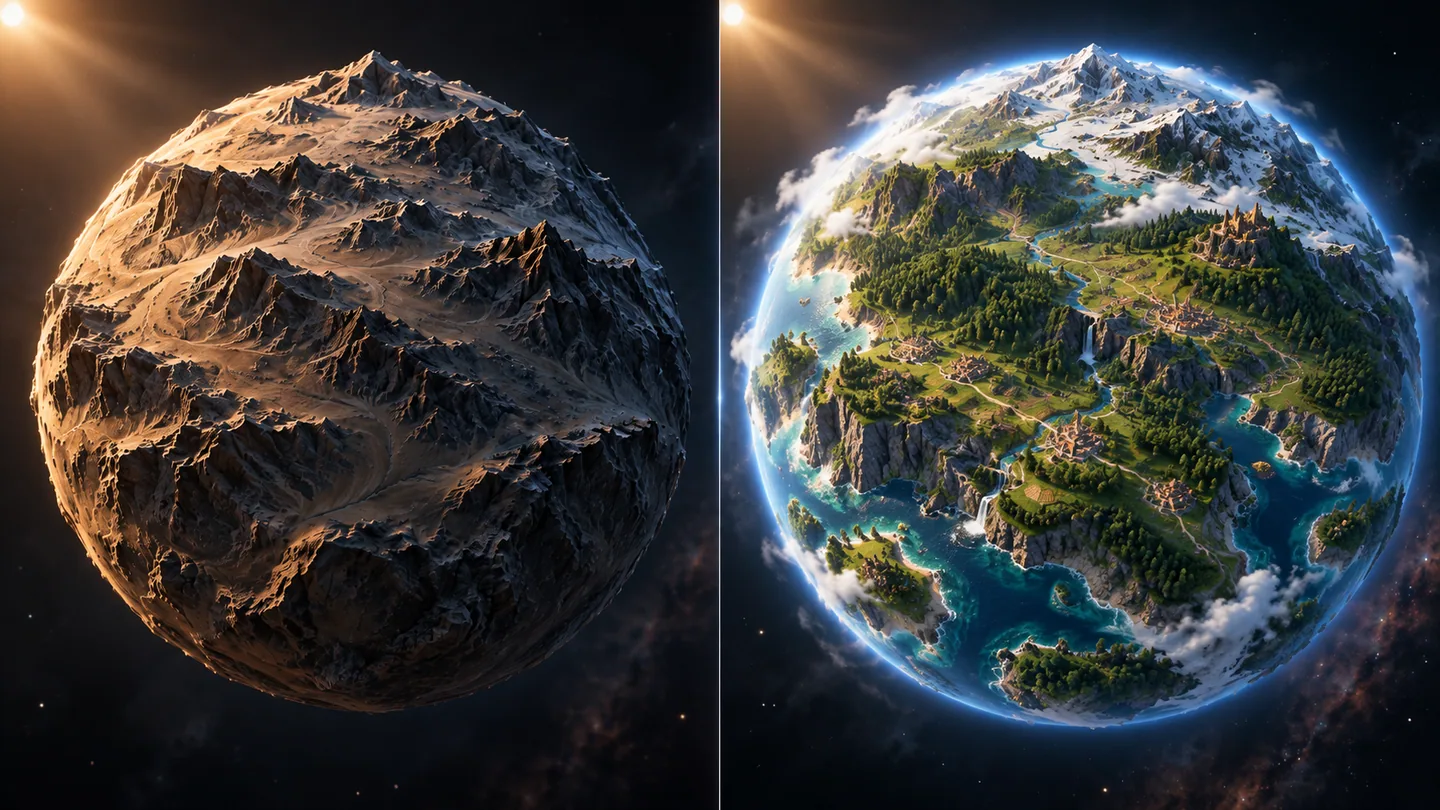
That question changed Worldsmith.
The goal stopped being:
How do I make a round planet?
It became:
How do I make building a game on a round planet practical?
Those are not the same product.
Not even close.
And this was also where I was making another mistake.
I was blaming myself.
“If Only I Was an AAA Level Designer…”
I genuinely had that thought.
Maybe if I were better.
Maybe if I had some insane AAA environment-design experience.
Maybe all this manual work wouldn't feel so impossible.
Maybe I was the problem.
I did that for a while.
And looking back, I was seeing the whole problem backwards.
If I build a tool to help me make planetary worlds, and then the tool hands me a sphere and leaves me with months of repetitive work...
why am I blaming myself?
The tool isn't solving enough.
That became one of the biggest ideas behind Worldsmith.
If Worldsmith cannot actually make creating these worlds easier, then I am better off without Worldsmith.
Harsh, but true.
A tool doesn't become useful because its technology is impressive.
A tool becomes useful when it removes pain.
That sounds obvious now.
It wasn't obvious to me then.
The creator should be spending their time thinking:
I want forest here.
Put a settlement around this region.
This road should connect those two places.
This part of the planet should be dry.
That area should flood.
The player dug this crater, so it needs to still exist when they come back.
Not:
What quaternion did I mess up this time?
The more Worldsmith developed, the more I wanted the horrible planetary maths to disappear underneath the workflow.
Not literally disappear.
Someone still has to suffer.
Apparently that someone is me.
But it shouldn't be every developer who buys the tool.
Then AI Showed Up
Now we need to talk about AI because it became part of this project's story whether I liked it or not.
And originally, I really did not like it.
When the whole generative AI boom started getting serious, I was a big AI hater.
I discarded almost anything AI.
I didn't sit there asking:
"How can this make my work faster?"
No.
My thinking was more like:
"This thing is just going to make trash, or make whatever it imagines I asked for, and then I'll waste my time fighting it until it finally makes what I wanted in the first place."
I also had the ownership problem in my head.
If AI made it, then was it actually mine?
Could I genuinely say I made this thing?
I didn't like that question either.
So for a long time, I just didn't bother.

Then about two years passed.
By then, Worldsmith was at a decent stage.
The spherical mesh existed.
There were multiple tests.
The core planet work was becoming real.
But the bigger problem remained.
This thing needed to grow much further.
And life was also happening.
I had work.
Other projects.
Games.
Other Unity tools.
Things outside development.
And, yes, sometimes I was just lazy.
I am not going to create some dramatic founder mythology where every night I was coding until 4 AM while inspirational music played in the background.
Sometimes I wanted to sleep.
Sometimes I couldn't be bothered.
Sometimes I wanted to work on something else.
That's normal.
So eventually I gave AI a chance.
And wow.
I became faster.
A lot faster.
And then I made a completely different mistake.
I started vibe coding.
The Vibe-Coding Disaster
You can probably imagine how this went.
Give AI the project.
Give AI the files.
Give it documentation.
Give it a prompt.
Tell it what I want.
Auto mode.
Go.
What could possibly go wrong?
Quite a lot, actually.
I got fast.
Very fast.
And because things were moving quickly, I let the AI take more and more of the wheel.
That's where the trouble started.
Files changed.
Systems got tangled.
One solution created problems somewhere else.
Parts of the architecture became harder to understand because I hadn't personally followed every decision.
Then bugs started appearing inside bugs.
And naturally I did the mature thing.
I blamed AI.
"AI, what have you done?"
Meanwhile I had basically handed it the keys, closed my eyes and climbed into the passenger seat.
Very sensible.
Eventually I got frustrated enough that I paused Worldsmith again.
I threw the project aside for a while.
Then I came back.
And when I returned properly, I rolled back the AI-heavy mess and started from a cleaner point.
Still using AI.
But very differently.
That second attempt is probably one of the biggest reasons Worldsmith is where it is now.
AI Does Not Drive Worldsmith Anymore
These days, if somebody could hear me working on Worldsmith, I probably sound slightly insane.
There is a lot of:
"AI, what have you done again?"
Then:
"No, no, no. Don't do it that way. Do it this way."
Then ten minutes later:
"Hmm. That's actually a nice idea. But what if we do this instead?"
Then later:
"Check this part. I think the bug may actually start here."
And occasionally it checks and...
yeah.
That actually was the problem.
Those moments matter more than they sound.
Because I eventually understood the difference between letting AI build something for me and co-working with AI while I build something.
I don't want AI driving.
I want it sitting beside me with tools.

That distinction completely changed how I work.
Now I question the solution.
I reject things.
I compare approaches.
I ask why.
I trace where the problem actually started.
Sometimes I already have the solution in mind and I am using AI to help implement it.
Sometimes I suspect a specific part of the architecture is causing a bug.
Sometimes the AI comes back with an idea I didn't think about.
Then I decide whether the idea belongs.
And that last part is important.
I decide.
The project still comes from somewhere.
The direction still comes from somewhere.
The problem selection still comes from somewhere.
The architecture still has to mean something.
AI speeds up implementation.
It does not magically invent the reason Worldsmith should exist.
I Also Had to Make Peace With Something
Here is the part that bothered me for a long time.
AI has come to stay.
And yes, it means somebody can see a tool, describe it to AI and attempt to build something similar.
That is the reality.
You can spend your life angry about it.
The reality will remain there.
So I had to change what I was protecting.
I stopped thinking:
"Nobody should be able to make something similar to mine."
That's not realistic anymore.
Instead I focus much more heavily on:
What am I actually thinking about that makes the product valuable?
The ideas.
The combinations.
The problems I notice because I actually use the tool.
The weird thing I think about while walking somewhere.
The thing I suddenly realise while showering.
The feature that starts as:
"Wait... what if..."
and six months later becomes an entire system.
There is a saying that people don't really buy your work, they buy the business idea behind the work.
I wouldn't take that literally for everything.
Implementation still matters.
Quality matters.
Support matters.
Performance matters.
But the deeper point is useful.
If somebody can recreate your entire product by only copying the obvious surface of it, then maybe the product wasn't deep enough yet.
That thought has heavily influenced Worldsmith.
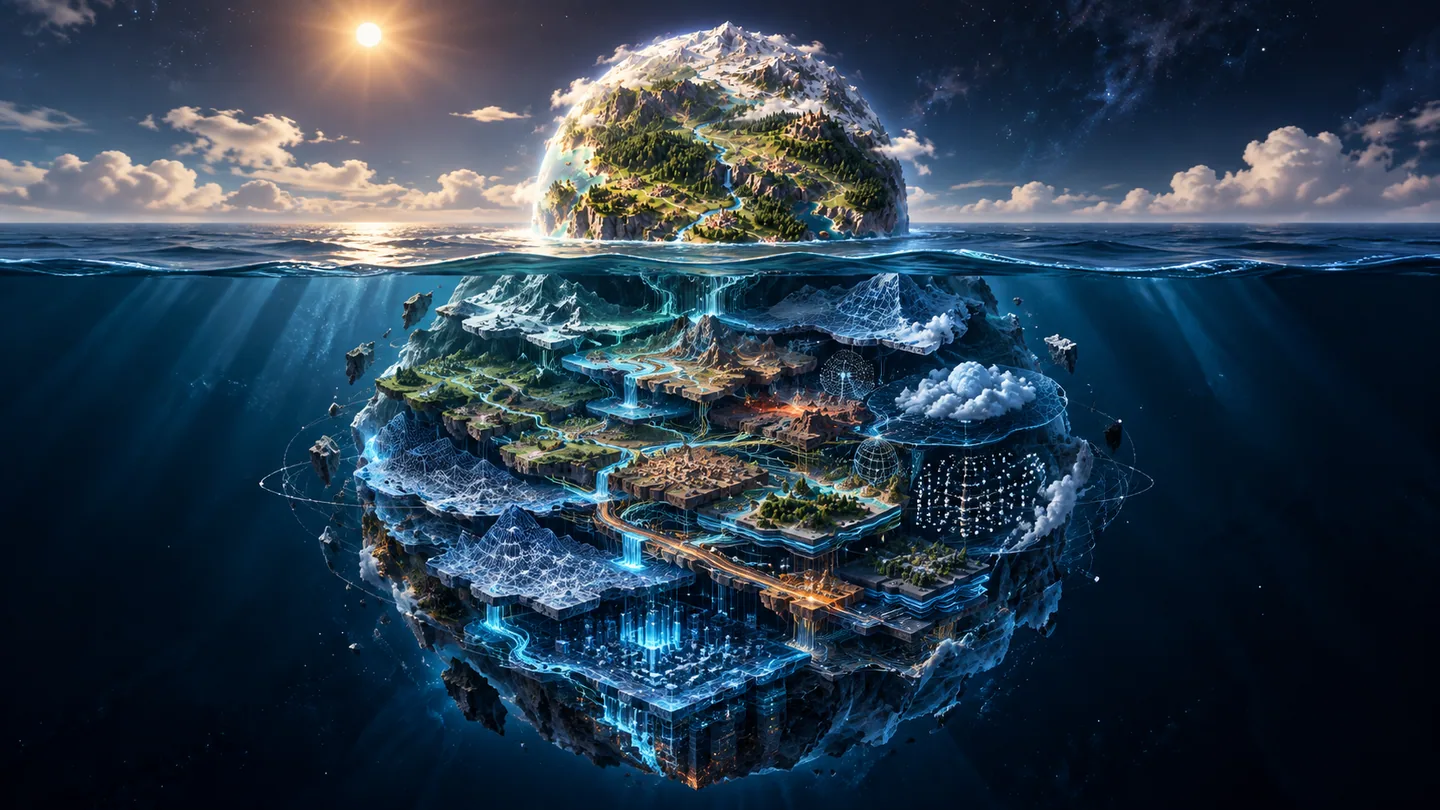
And strangely, learning how to work with AI properly didn't make me spend less time on Worldsmith.
I still spend half a day on it sometimes.
The difference is that half a day now produces far more.
That is the actual advantage.
Not pressing a button and going away.
Not giving AI the project and hoping Future Me understands whatever comes back.
I am faster because I can spend my time co-working with something that can help me execute, test ideas, investigate problems and challenge approaches.
But I'm still there.
That's the bit I got wrong at the beginning.
So What Is Worldsmith Now?
The easiest description is:
Worldsmith is a Unity framework for building game-ready spherical worlds.
Not just planets you look at.
Planets you use.
Walk on.
Build on.
Populate.
Modify.
Save.
Stream.
Simulate.
Destroy, if your game is feeling particularly rude.
The words game-ready matter a lot to me.
Because Worldsmith is not trying to become an Earth viewer.
It is not mainly a GIS tool.
It is not trying to compete with systems whose purpose is showing satellite data beautifully or recreating Earth for mapping, visualisation or scientific use.
Those tools solve a real problem.
Just a different one.
Worldsmith asks:
What if the round planet itself is the game world?
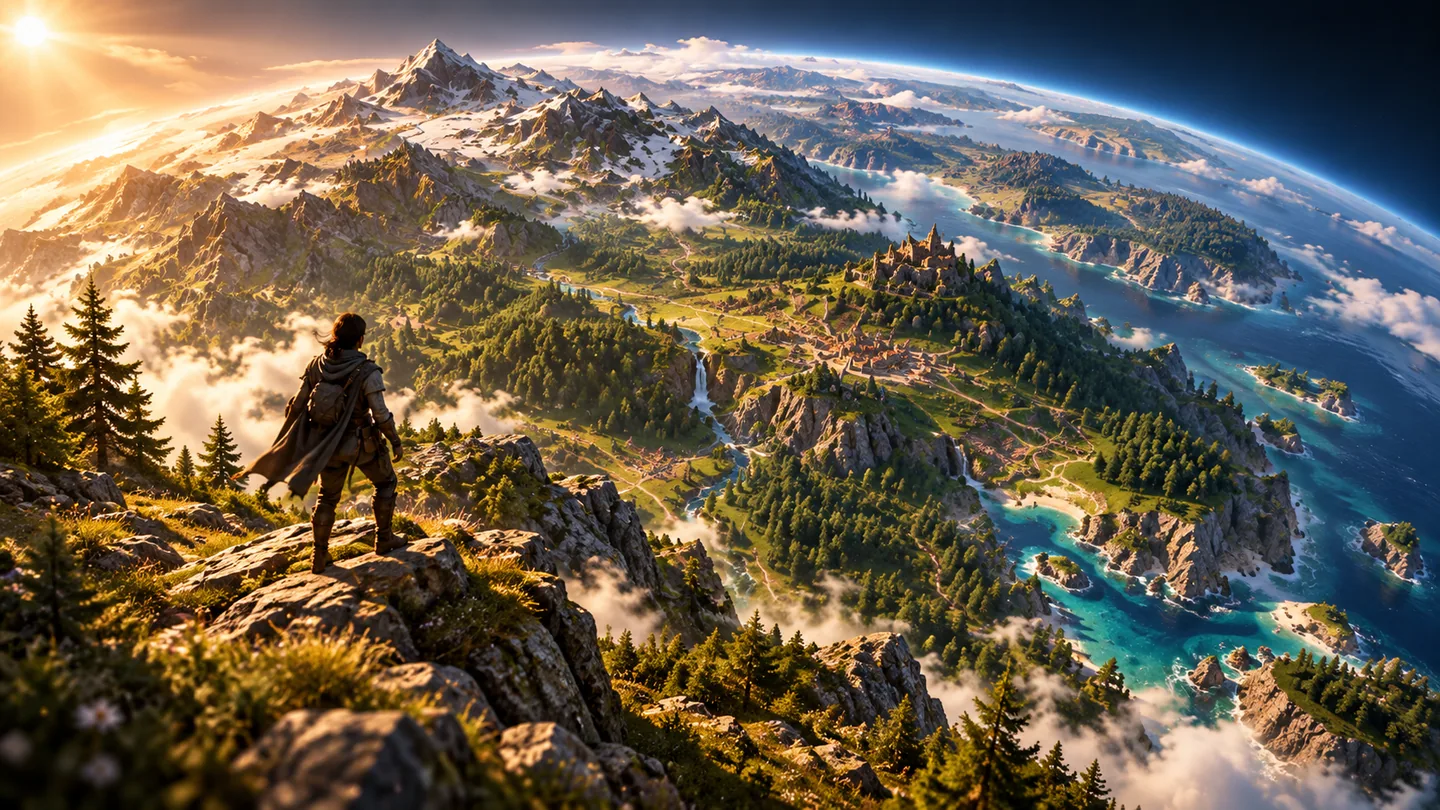
That world could look like Earth.
It could look nothing like Earth.
It could be Mars-inspired.
A tiny stylised planet.
A huge survival world.
A strategy map you can actually walk across.
A civilization simulation.
A god game.
A planetary RPG.
A colony builder.
A sandbox.
A procedural exploration game.
Something I haven't thought of yet.
The actual genre is less important than one thing:
The spherical nature of the world matters to the game.
The Planet Has to Understand That It Is Round
This is something I keep coming back to.
I don't want Worldsmith to generate a sphere and then force every other system to pretend it's still living inside a normal flat Unity scene.
That is where things become silly.
If the planet is round, then the systems need to understand that fact.
Gravity needs to understand it.
Terrain needs to understand it.
The player needs to understand it.
Vegetation needs to understand it.
Fog needs to understand it.
Construction needs to understand it.
Streaming needs to understand it.
Eventually weather needs to understand it.
Roads need to understand it.
Water needs to understand it.
NPCs need to understand it.
The whole point is to stop treating the spherical planet like a special visual effect.
It is the world.
What Worldsmith Already Has
I also don't want to write this post like all of this is some distant dream sitting in a notebook.
Worldsmith is already far beyond the original round-mesh prototype.
At its core is the spherical terrain system.
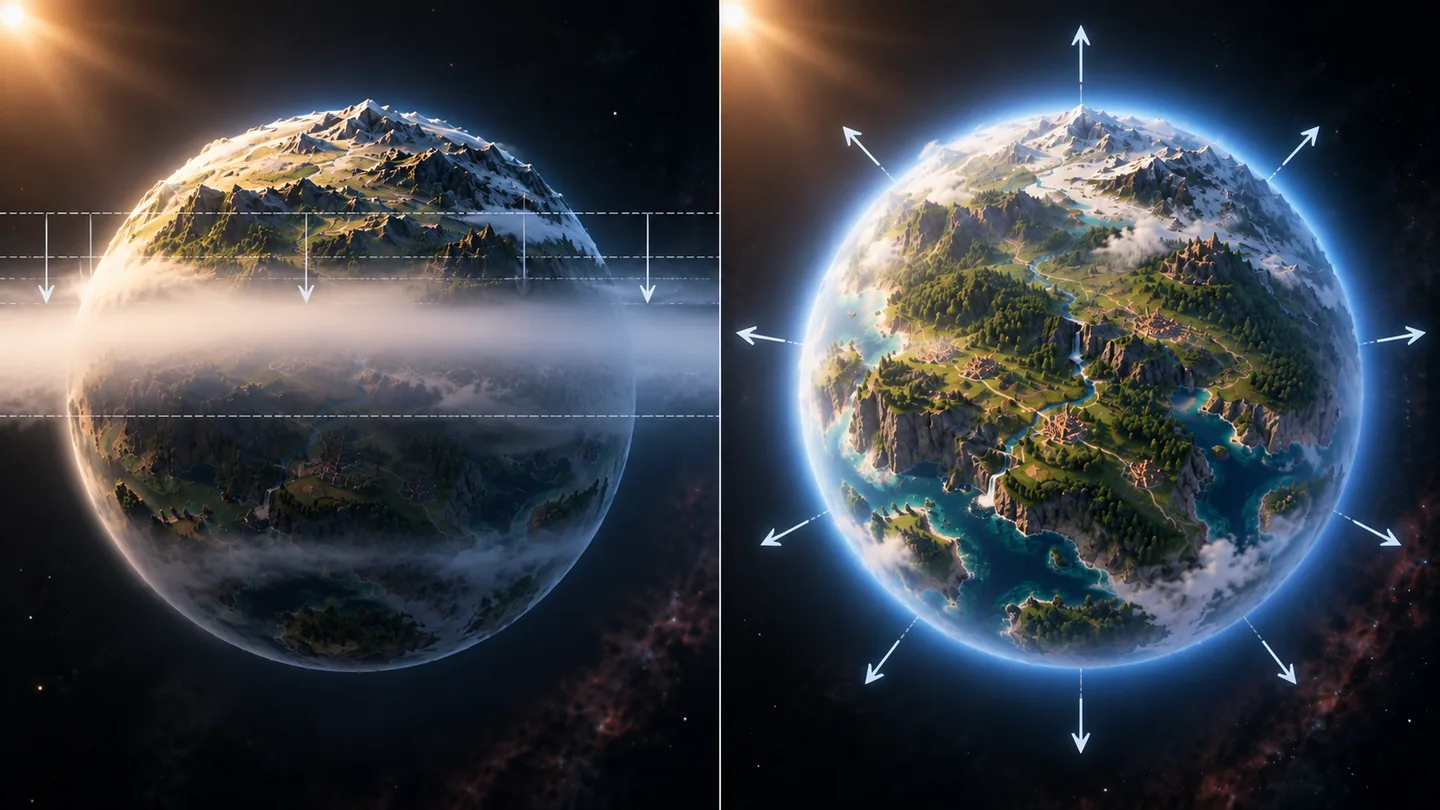
The terrain is structured around a cube-sphere approach with LOD and streaming foundations so the world doesn't need to exist as one ridiculous full-resolution mesh.
That alone is a major difference between:
"Look, I generated a sphere."
and:
"I need somebody to actually play a game on this."
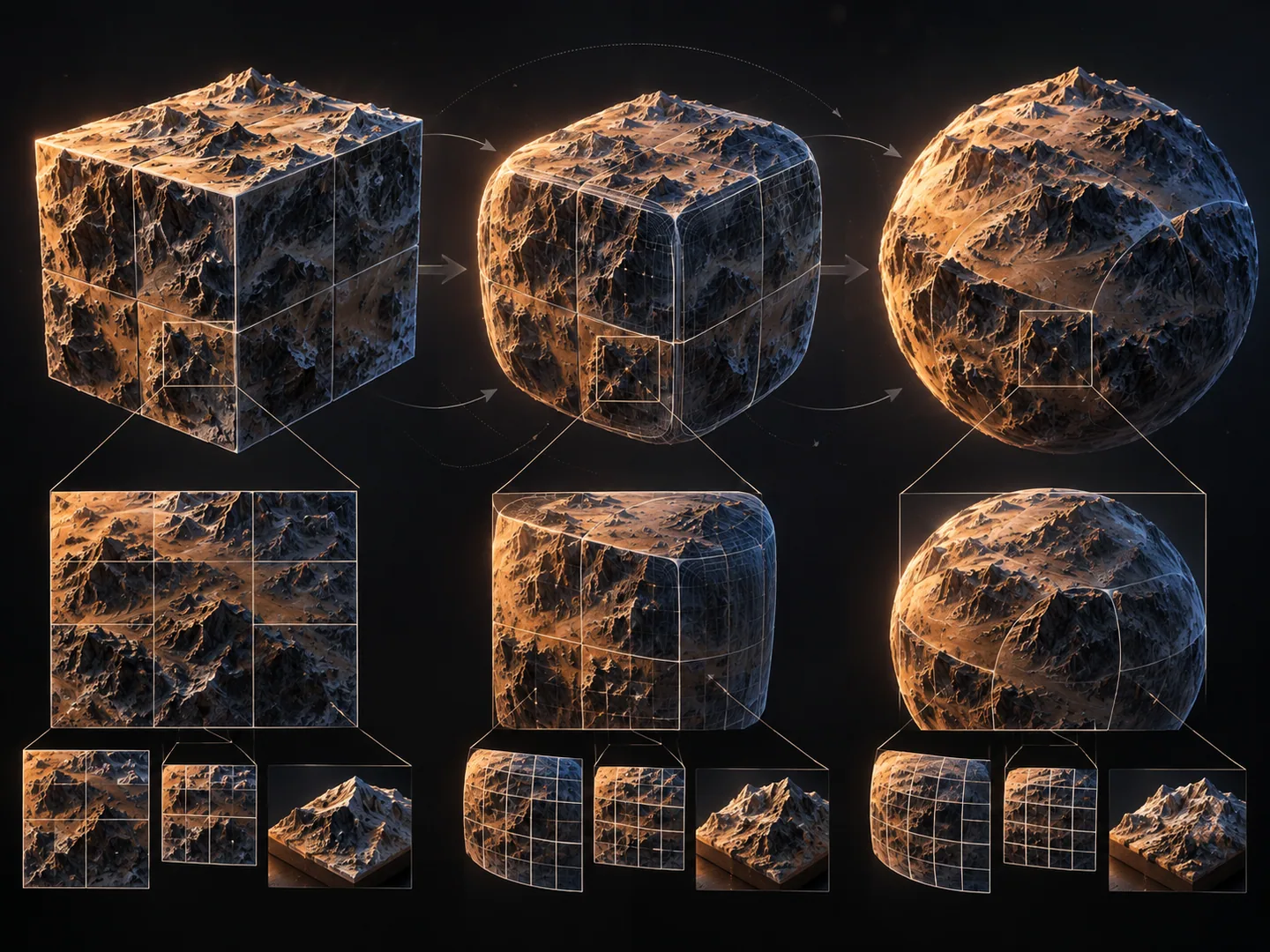
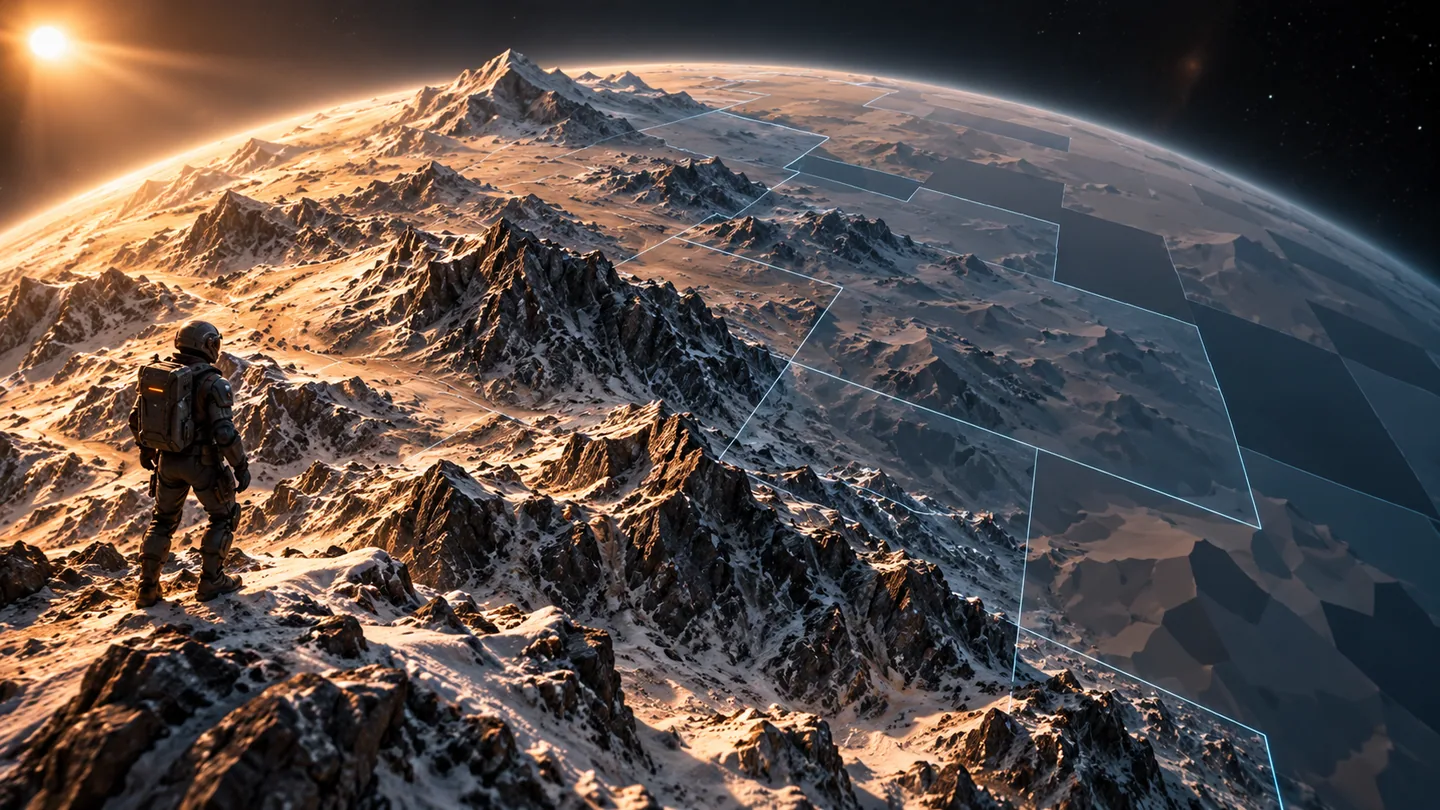
Then there is the large-world problem.
Unity, like basically every real-time engine, lives in a world where numerical precision eventually becomes something you need to respect.
Travel far enough and tiny errors stop being tiny.
So Worldsmith includes large-coordinate foundations, double-precision concepts where needed, and floating-origin/rebasing work to keep the active gameplay area stable.
Because imagine finally walking around your entire planet and then your character starts vibrating because mathematics has had enough.
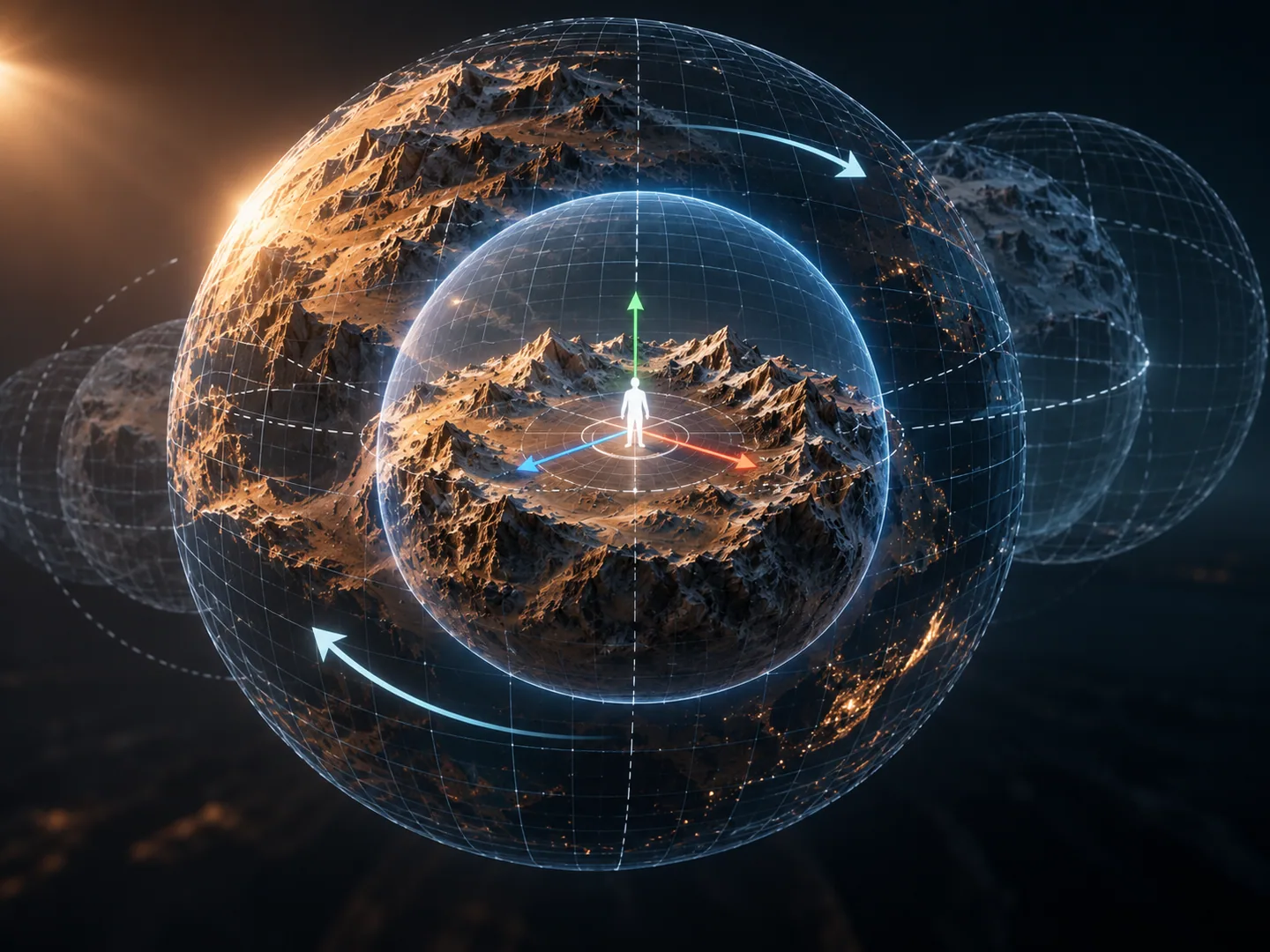
There is also planetary gravity and spherical locomotion support.
Again, because Vector3.down cannot run the government forever.
Terrain deformation is another major area.
And this is one I care about deeply.
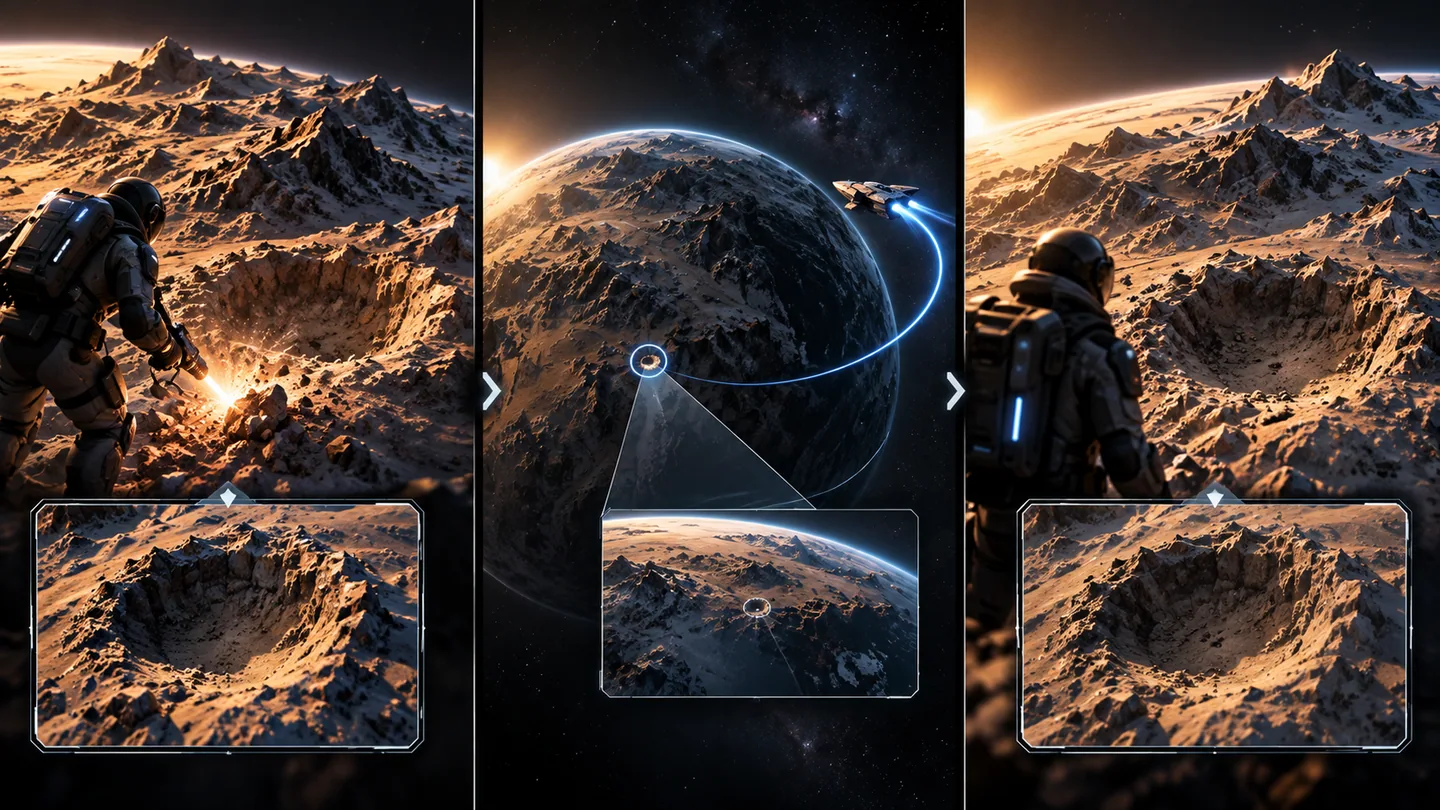
If a player modifies the planet, that edit should mean something.
If they dig.
Flatten.
Raise terrain.
Damage an area.
Terraform something.
Whatever the game allows.
That change needs to survive the world doing normal world things.
Like unloading.
Streaming back in.
Changing LOD.
Saving and loading.
A temporary dent that disappears because you walked away isn't really persistent terrain deformation.
It's a magic trick.
Worldsmith also has work around surface scattering, vegetation and foliage.
Because once again, I refuse to manually place every tree on a planet.
I have other things to do before I die.
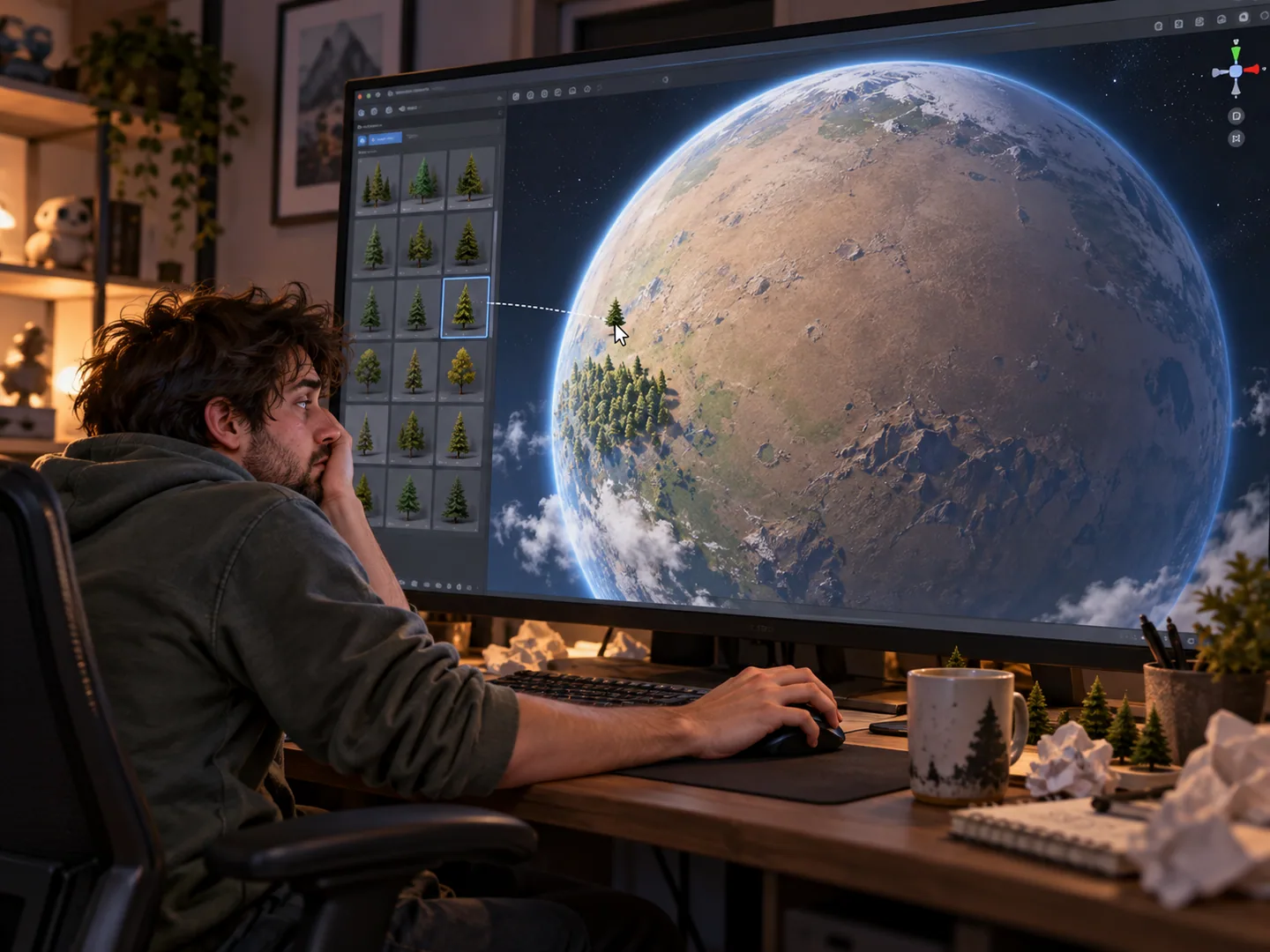
The smarter direction is obvious.
Let the world help decide.
Slope.
Elevation.
Biome.
Surface type.
Density.
Exclusion zones.
Climate eventually.
Gameplay regions.
Rules.
Then the developer guides the world instead of decorating every square metre personally.
That idea extends beyond vegetation.
And honestly, that is becoming one of the biggest patterns inside Worldsmith.
Stop Placing Everything. Start Describing the World.
This is where the tool starts moving beyond generation.
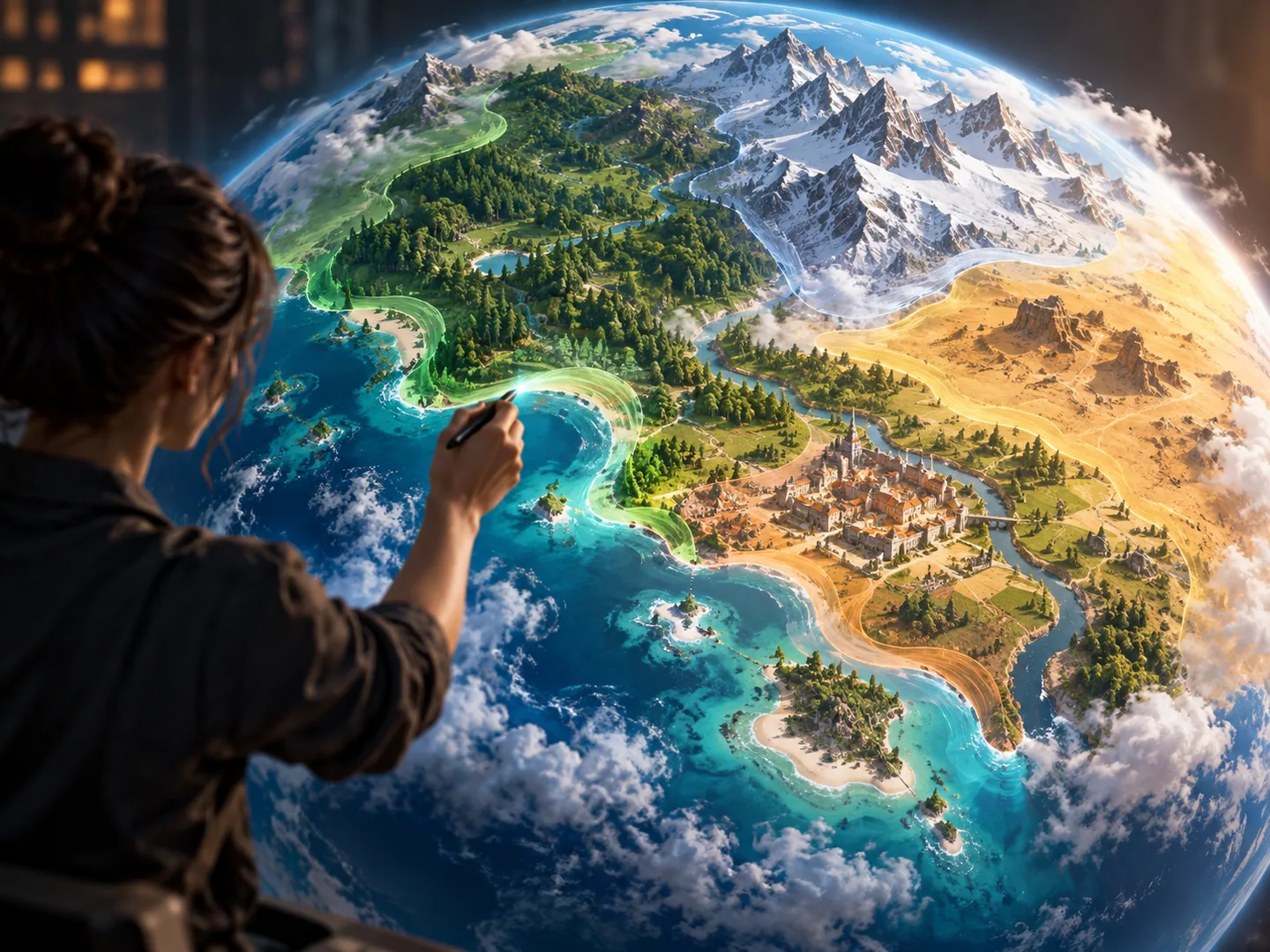
I want the developer to increasingly describe intent.
Where should forests exist?
Where can settlements exist?
Where should roads connect?
Where should cliffs appear?
Where should grass avoid?
Which regions should be dry?
Where does the player want construction?
Which areas are protected from procedural placement?
Those decisions are far more valuable than clicking ten thousand times.
That distinction matters.
Procedural tools get accused of making everything generic.
Sometimes they absolutely do.
If all you give the user is:
Generate World
and then random things happen everywhere...
yeah.
Congratulations.
You invented a button.
What I want is closer to controlled proceduralism.
You decide what the world should be.
The framework handles more of the labour required to make that decision exist at planetary scale.
Roads Are Easy Until They're on a Planet
A road sounds simple.
Spline.
Mesh.
Done.
Until it needs to live on spherical terrain.
Then it needs to follow curvature.
Understand terrain.
Potentially alter terrain.
Avoid bad locations.
Connect meaningful destinations.
Interact with construction.
Eventually help settlements make sense.
Maybe population uses it.
Maybe trade uses it.
Maybe NPC movement uses it.
Maybe destruction changes it.
Suddenly a road isn't just a mesh.
It is part of the world.
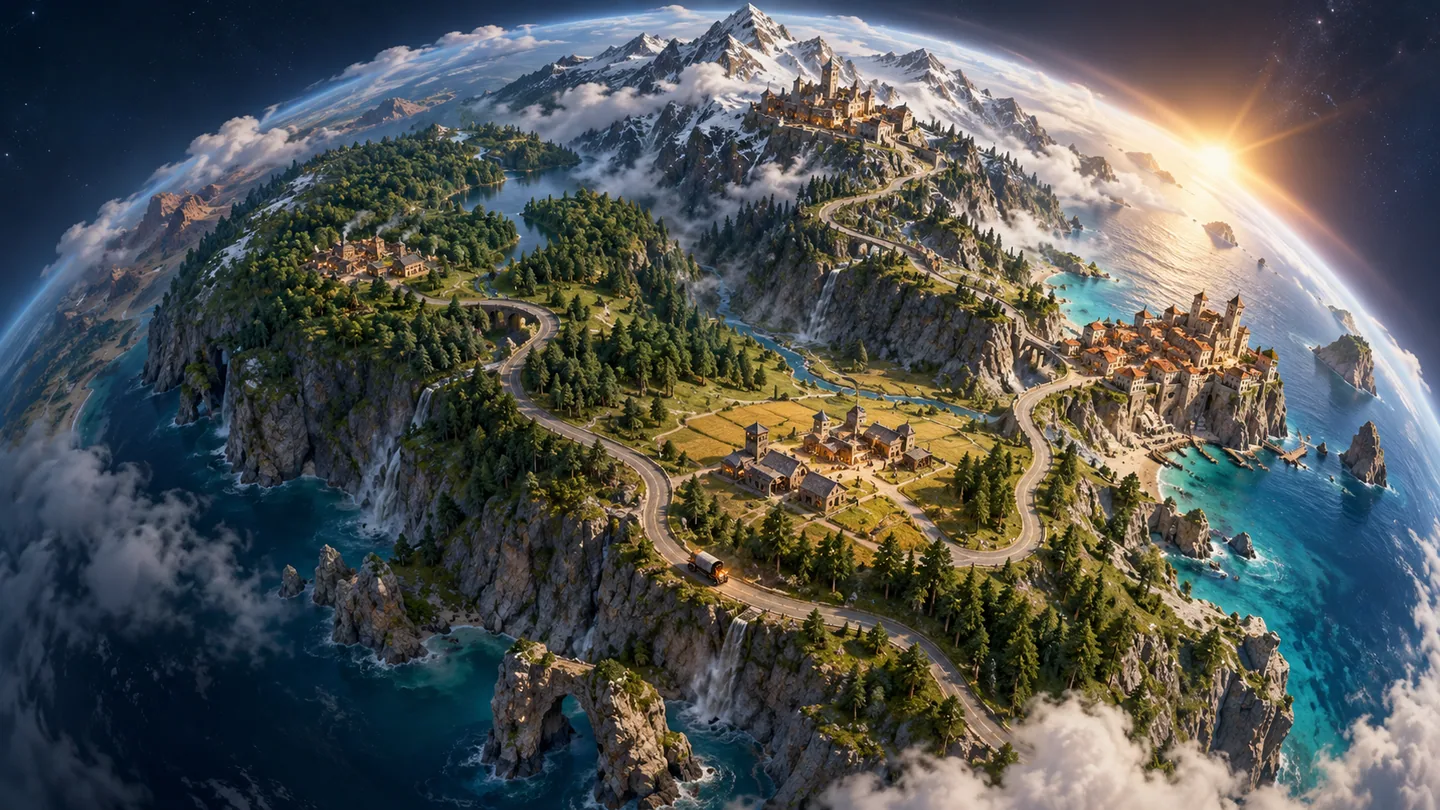
This same thinking applies to settlements.
Settlements imply roads.
Roads affect movement.
Movement affects population.
Terrain affects where construction makes sense.
Water affects where settlements make sense.
Climate affects vegetation.
Vegetation affects resources.
Disasters affect settlements.
Now we are no longer talking about a sphere generator.
We are talking about systems.
And that is exactly where I want Worldsmith to go.
Water Is a Monster I Have Decided to Fight Anyway
Water sounds easy too.
Put a slightly larger blue sphere around the planet.
Boom.
Ocean.
Except no.
Not if you want the water to actually belong to the game.
Coastlines matter.
Beaches matter.
Depth matters.
Transitions matter.
Terrain interaction matters.
Characters interacting with water matter.
Physics matters.
Shore placement matters.
And then rivers show up.
Wonderful.
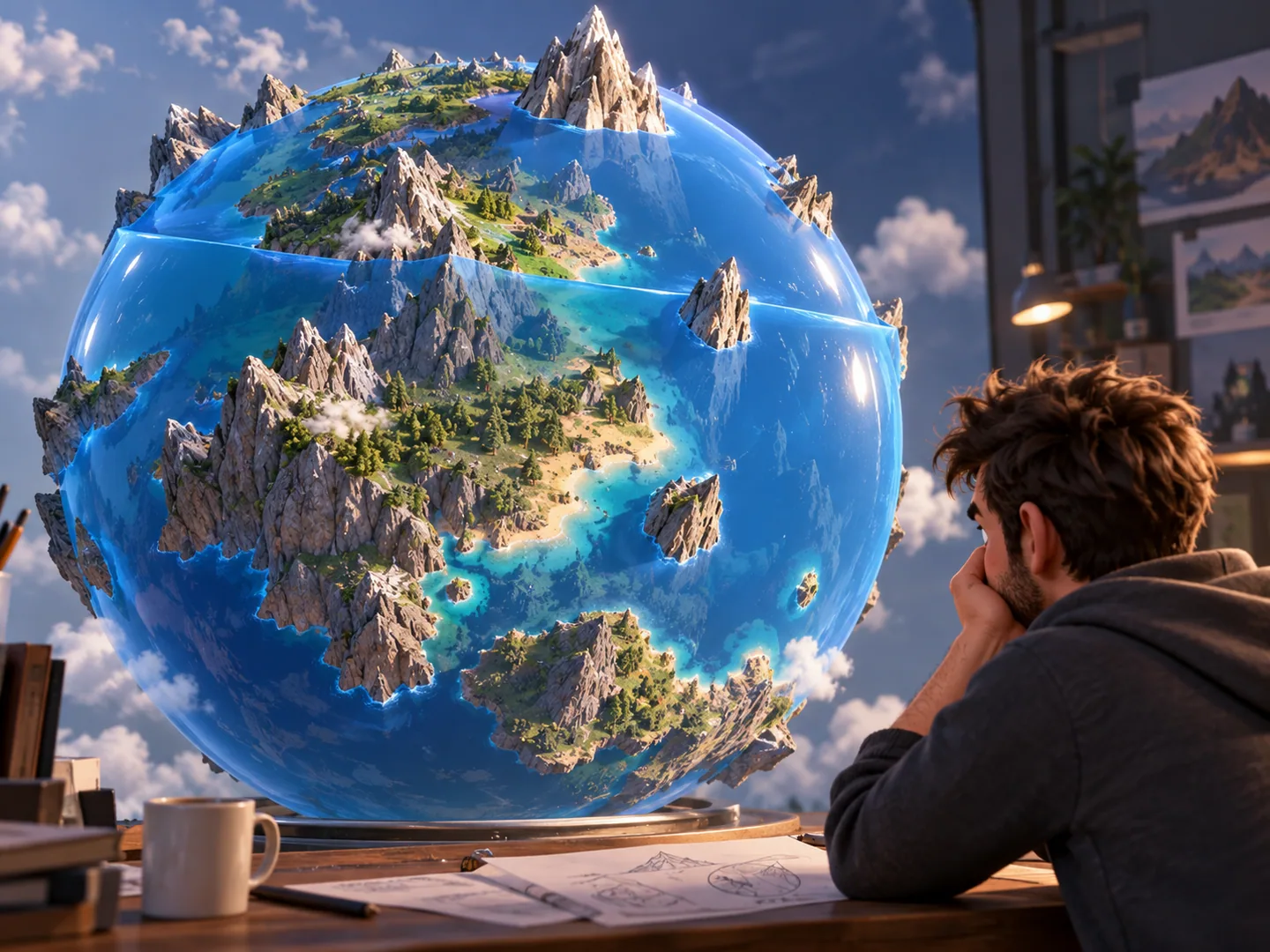
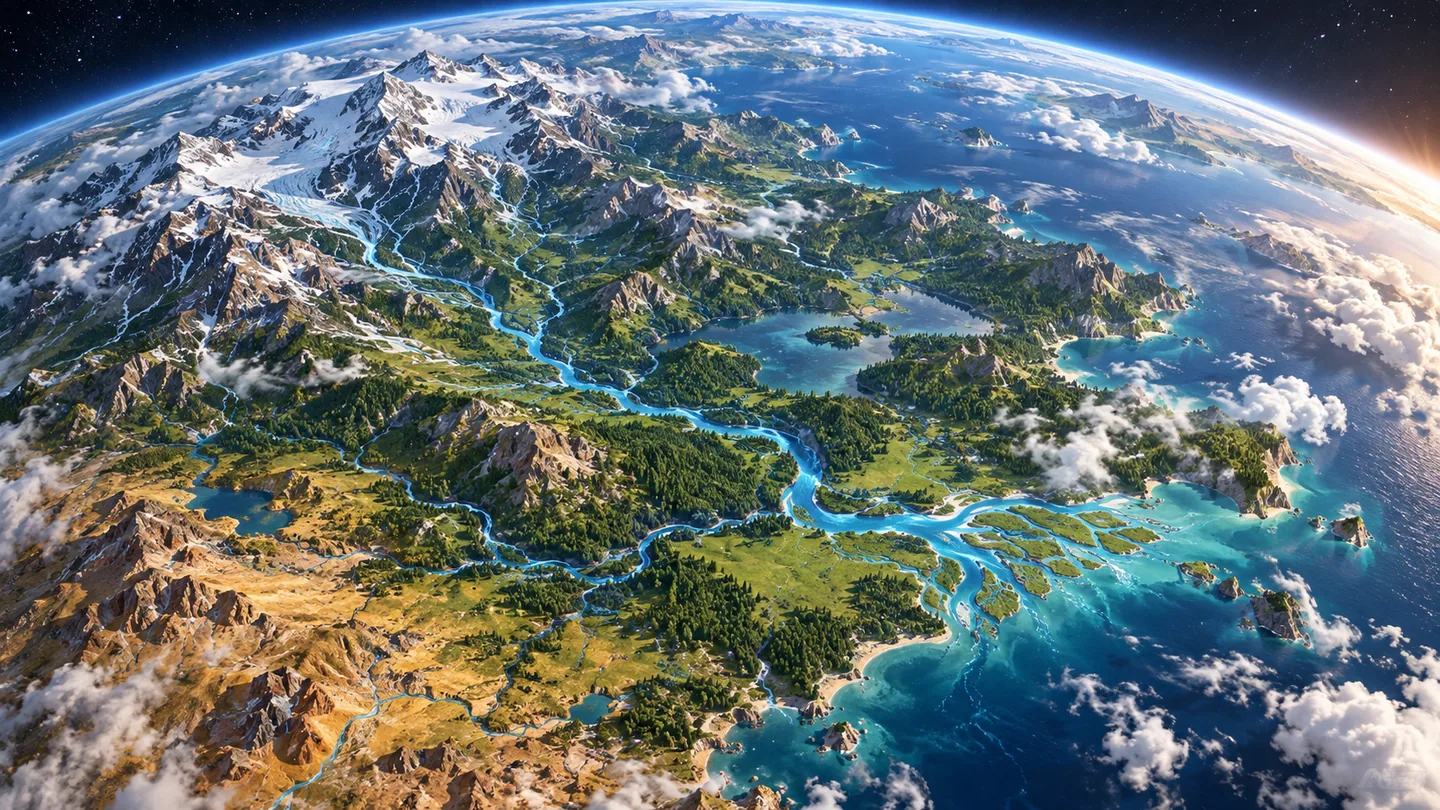
Rivers are especially interesting because a believable river should not just be a spline somebody randomly drew across the terrain.
At least not if the framework already knows what the terrain looks like.
Water flows downhill.
Terrain has elevation.
That means eventually Worldsmith can reason about drainage.
Watersheds.
Accumulation.
Flow paths.
Where water collects.
Where rivers merge.
Where they reach oceans or lakes.
Now suddenly the terrain is participating in the creation of the world.
That is much more interesting.
Is that difficult?
Yes.
Very.
Does manually drawing the rivers across an entire planet sound more enjoyable?
No.
So here we are.
Cliffs, Rocks and the Problem With Polite Terrain
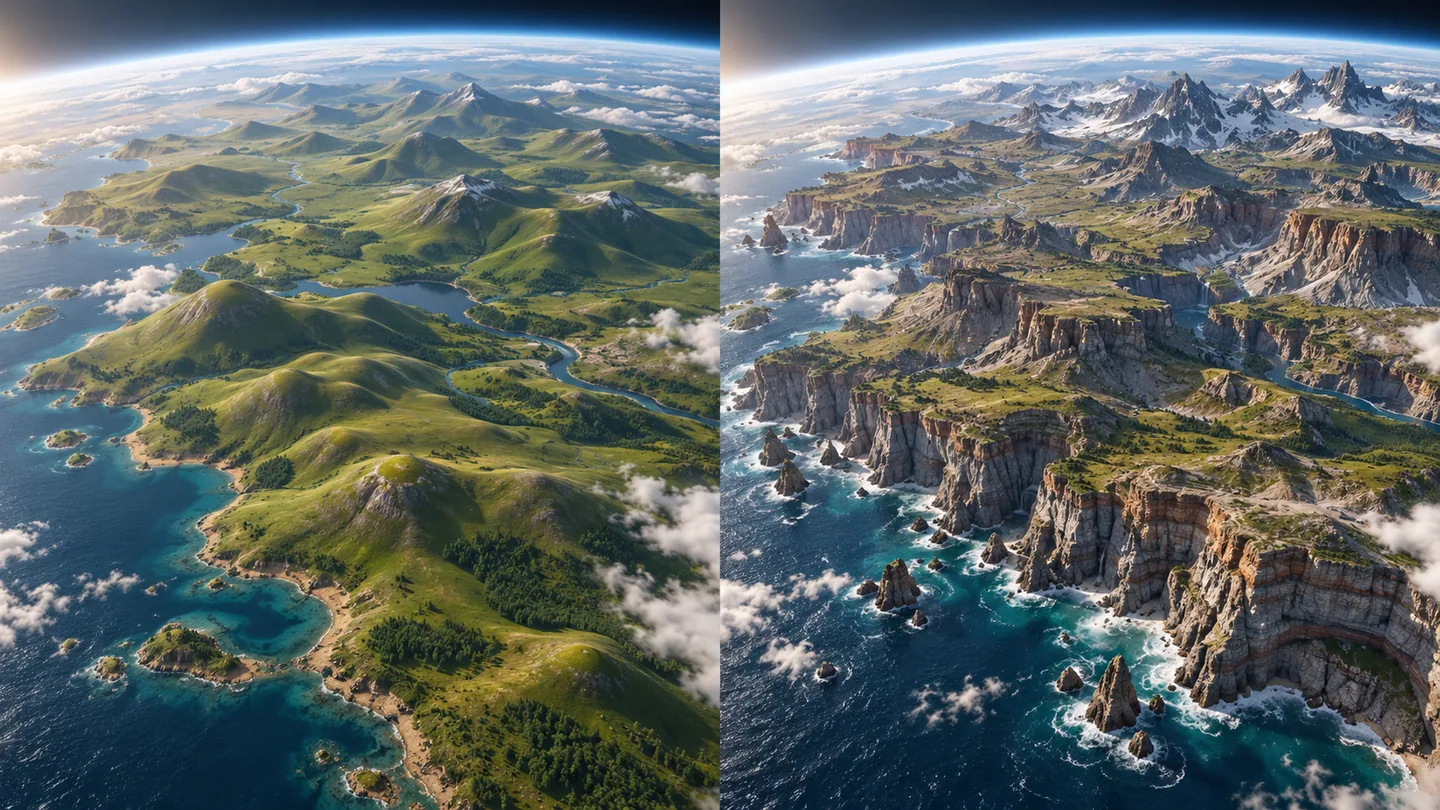
Terrain generators love smoothness.
Real terrain doesn't care.
Real terrain can be ugly.
Sharp.
Broken.
Exposed.
Eroded.
Layered.
That is why cliffs matter.
You can have beautiful height variation and still have a world that looks strangely soft everywhere.
So another direction inside Worldsmith is stronger geological dressing.
Cliff faces.
Rock edges.
Escarpments.
Sharp transitions.
Systems that recognise where those features make sense instead of requiring developers to decorate every steep slope themselves.
Atmosphere Is Another Place Flat Worlds Betray You
A normal scene can get away with a lot.
Fog based on world height?
Fine.
Cloud layers based on global Y?
Fine.
Wind moving in one global direction?
Probably fine.
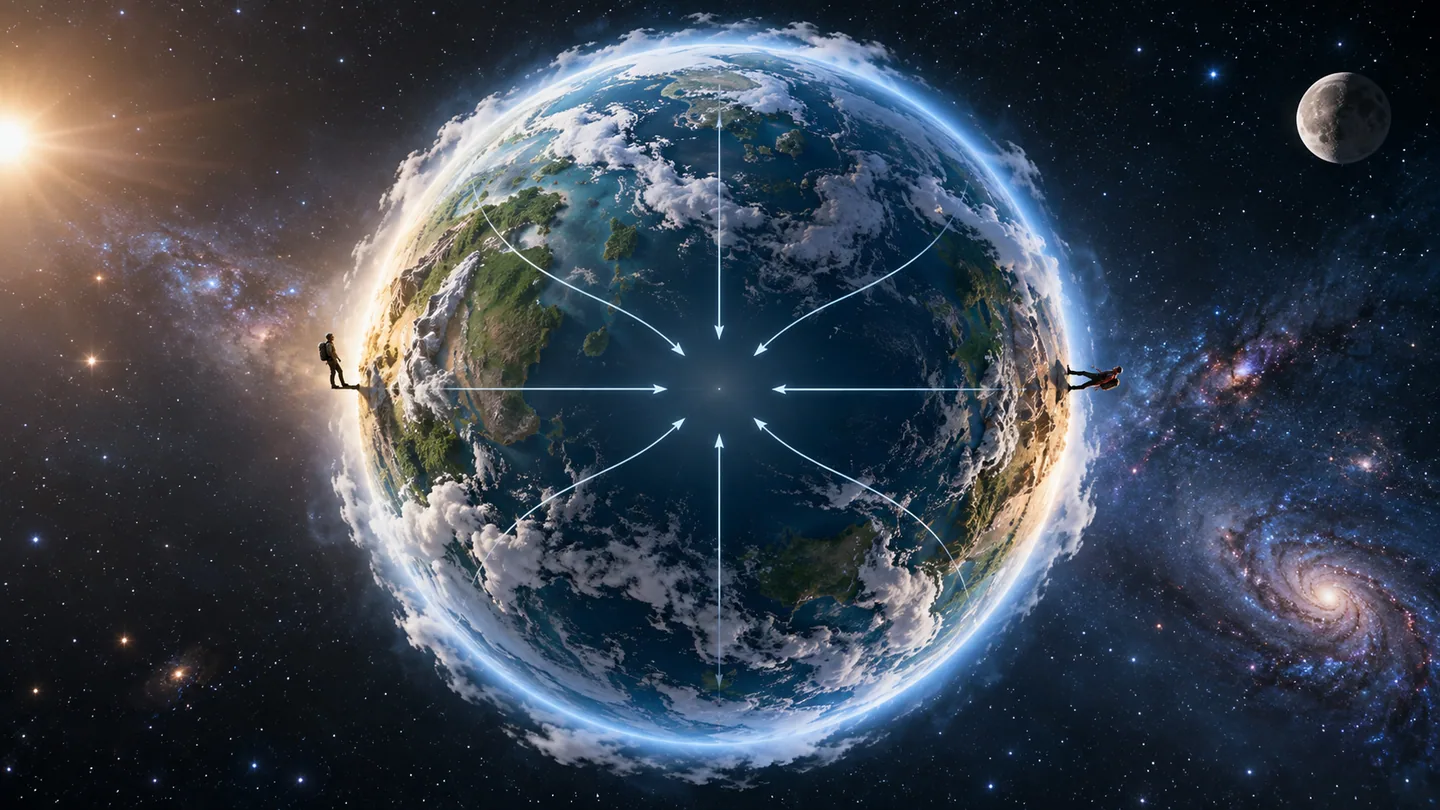
Then you put somebody on the opposite side of a sphere.
Now their up is somebody else's down.
This is why Worldsmith's atmosphere work has to think planet-relative.
Altitude is not simply world-space Y.
It is distance from the planet's centre relative to the surface.
That sounds like a small difference until every visual effect depends on it.
Weather eventually has to follow that same logic.
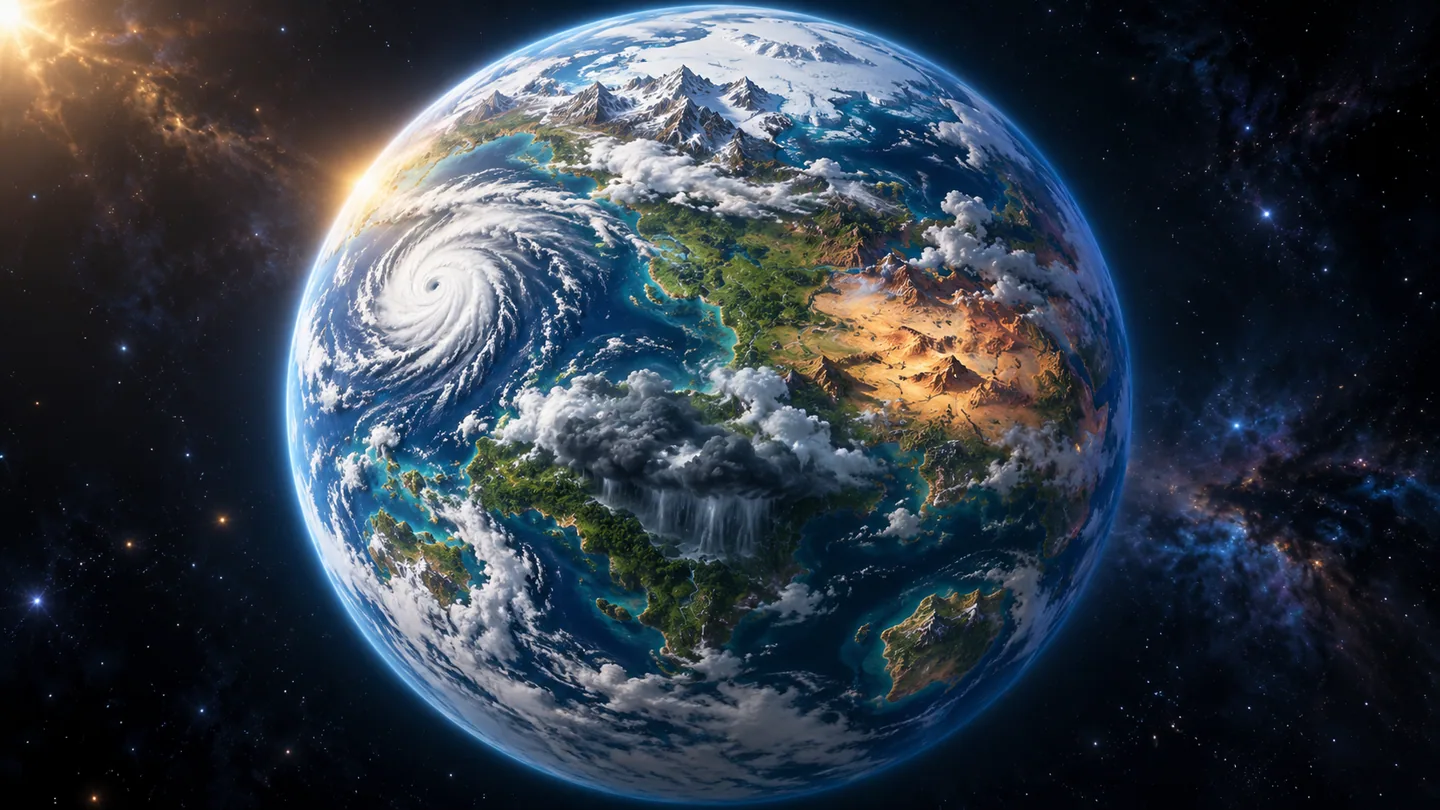
And I don't want weather to just mean:
"Spawn rain particles near player."
That works for many games.
Worldsmith is trying to move toward something deeper.
Terrain affecting weather.
Elevation affecting temperature.
Water affecting moisture.
Wind moving systems.
Biomes reacting.
Storms travelling.
Maybe disasters emerging from those systems.
Again, I am not going to pretend every one of those things is finished today.
They're not.
This is the direction.
There is a difference between a roadmap and pretending the future already compiled successfully.
The Living World Problem
This is where my ambition becomes slightly unreasonable again.
I don't only want to generate land.
Long term, I want Worldsmith to help create worlds that do things.
There are already foundations and experiments around agents, population, settlements, territories, economies, disasters and broader simulation ideas.
Not because every Worldsmith user should suddenly be forced to build Civilization.
Please no.
The framework needs to stay modular.
Maybe your game needs settlements.
No economy.
Fine.
Maybe it needs weather but no NPC simulation.
Fine.
Maybe you need roads, vegetation and construction and absolutely nothing involving population.
Fine.
Maybe you are making some giant simulation game and you want everything.
Good luck.
Have the buffet.
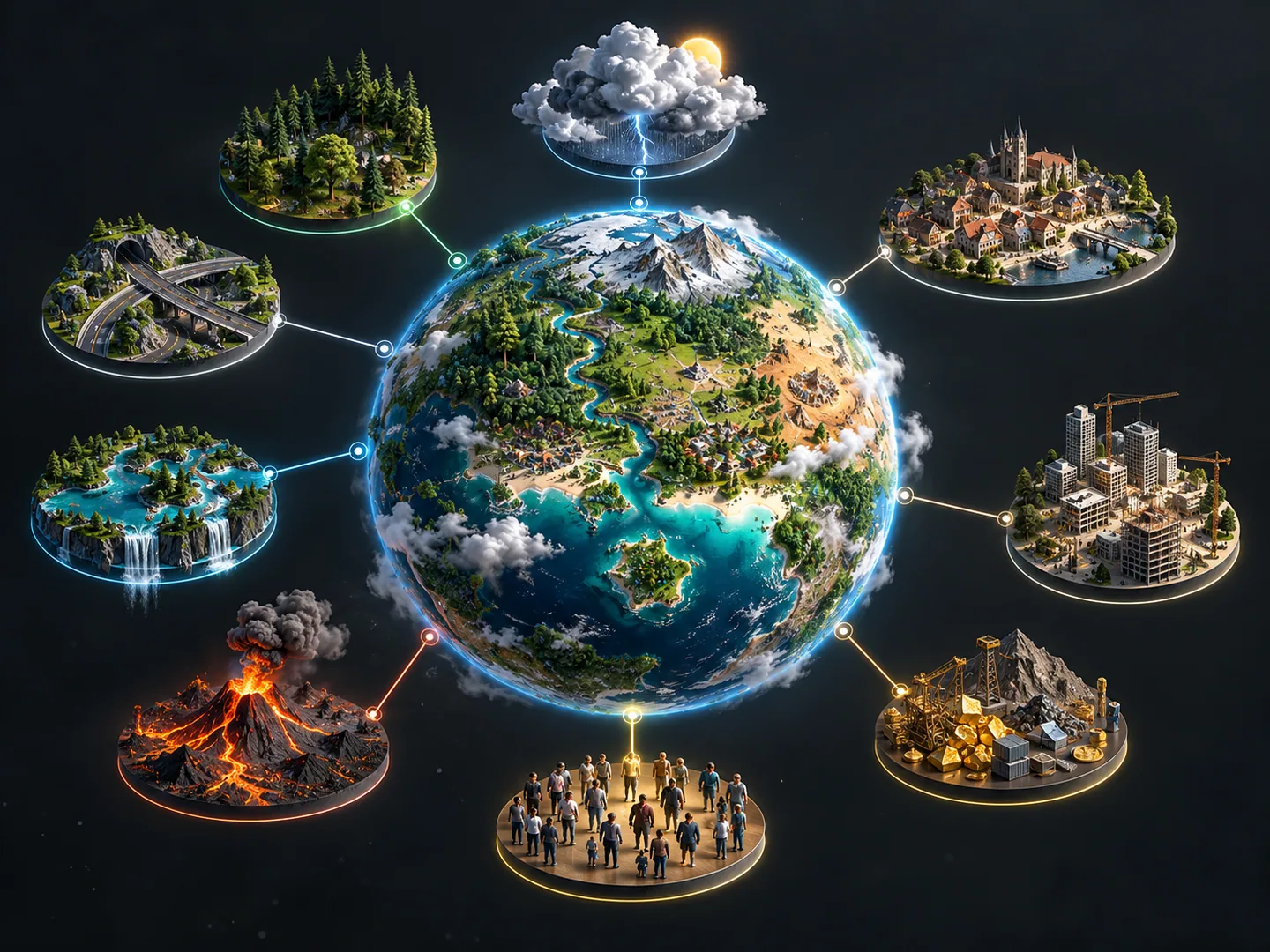
The important thing is that the systems can increasingly understand each other.
Because that is where something begins feeling less like generators and more like a world.
A settlement existing because the terrain, water and resources made the location sensible is more interesting than a settlement spawning because Random.Range picked a point.
A river that exists because the terrain drains through a valley is more interesting than a decorative blue spline.
Vegetation that changes because the region is dry is more interesting than evenly distributed trees.
A disaster that affects roads and population is more interesting than a particle effect.
That is the direction I mean when I call this Worldsmith.
Generating the planet is becoming the opening move.
Why Worldsmith Is Not Primarily an Earth GIS Tool
I keep making this distinction because it matters.
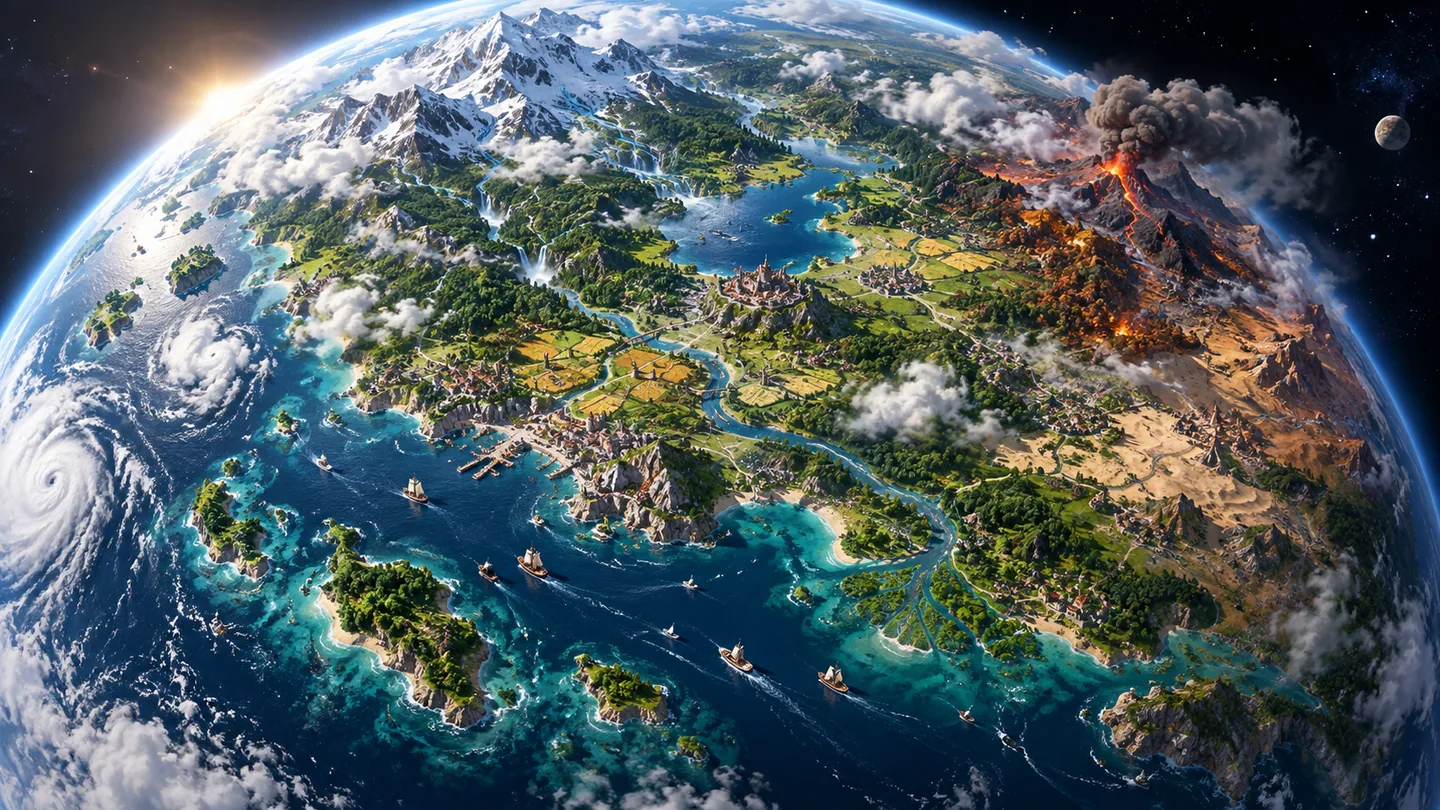
Worldsmith is not supposed to become an Earth GIS viewer.
That doesn't mean I hate real-world data.
Actually, I think real planetary data could become one of the more exciting future parts of the tool.
But there is a difference between:
showing geographic data
and
using geographic data as the starting point for a game world.
I care about the second one.
Imagine choosing Mars elevation data.
Generating that body inside Worldsmith.
Then making a survival game on it.
Adding construction.
Changing terrain.
Adding fictional settlements.
Roads.
Resources.
Atmosphere if your game wants one.
Terraforming.
Gameplay.
The data is the starting point.
It doesn't become the purpose of the tool.
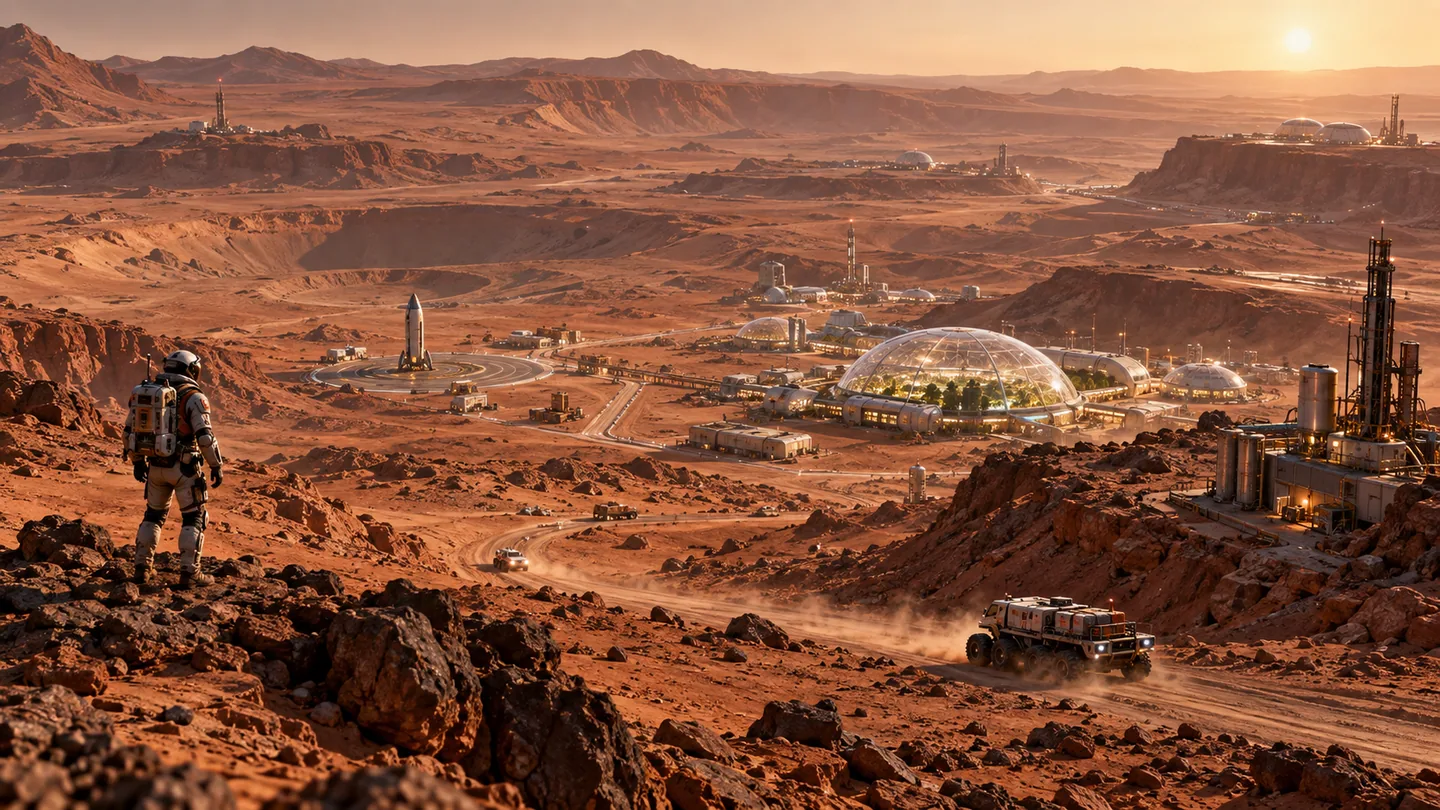
Earth could be an input.
Mars could be an input.
The Moon could be an input.
Other bodies where useful elevation data exists could eventually be inputs.
And fully fictional procedural terrain remains just as valid.
I do not want the tool's identity tied to recreating Earth.
I want it tied to building playable spherical worlds.
That distinction gives Worldsmith much more room to breathe.
One Planet. Properly.
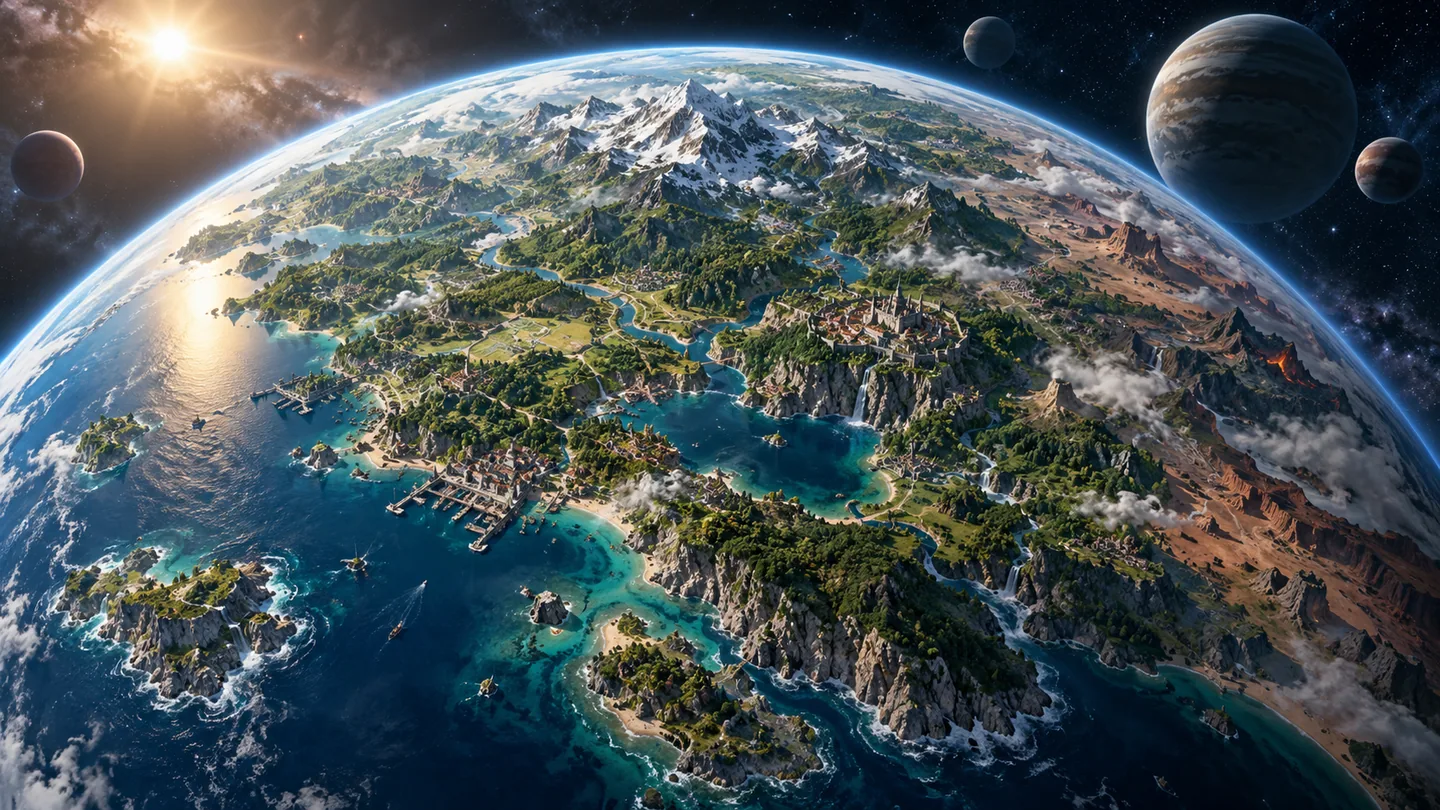
Another choice I made is that Worldsmith is not trying to become a full solar-system framework.
Could it eventually interact with one?
Sure.
But that isn't the obsession.
I would rather make one active planet deeply useful than give you fifty planets that are mostly scenery.
There are already tools for star systems.
Orbital rendering.
Space scenes.
Astronomy.
Worldsmith's problem is closer to:
"Okay. You landed. Now what?"
Can you walk around the planet?
Can you build?
Can terrain change?
Can vegetation exist?
Can roads exist?
Can NPCs use it?
Can it save?
Can weather happen?
Can regions stream?
Can the world become a game?
That is enough trouble for one product, thank you.
Who Is This Actually For?
Worldsmith is not for every Unity project.
And I don't want to pretend it is.
If your game works perfectly on a normal flat terrain, please use the flat terrain.
You will save yourself some suffering.
Not everything needs to be spherical because spherical sounds cool.
Worldsmith starts making sense when curvature actually matters.
Survival games.
Planetary exploration.
Colony games.
God games.
Strategy games.
Civilization simulations.
Procedural RPG worlds.
Sandbox games.
Terraforming games.
Small stylised planets.
Large realistic planets.
Games where travelling continuously around the world matters.
Games where the geometry of the world is part of the gameplay.
Games where the player should eventually be able to say:
"I started over there."
and point across a horizon that genuinely wraps around the same world.
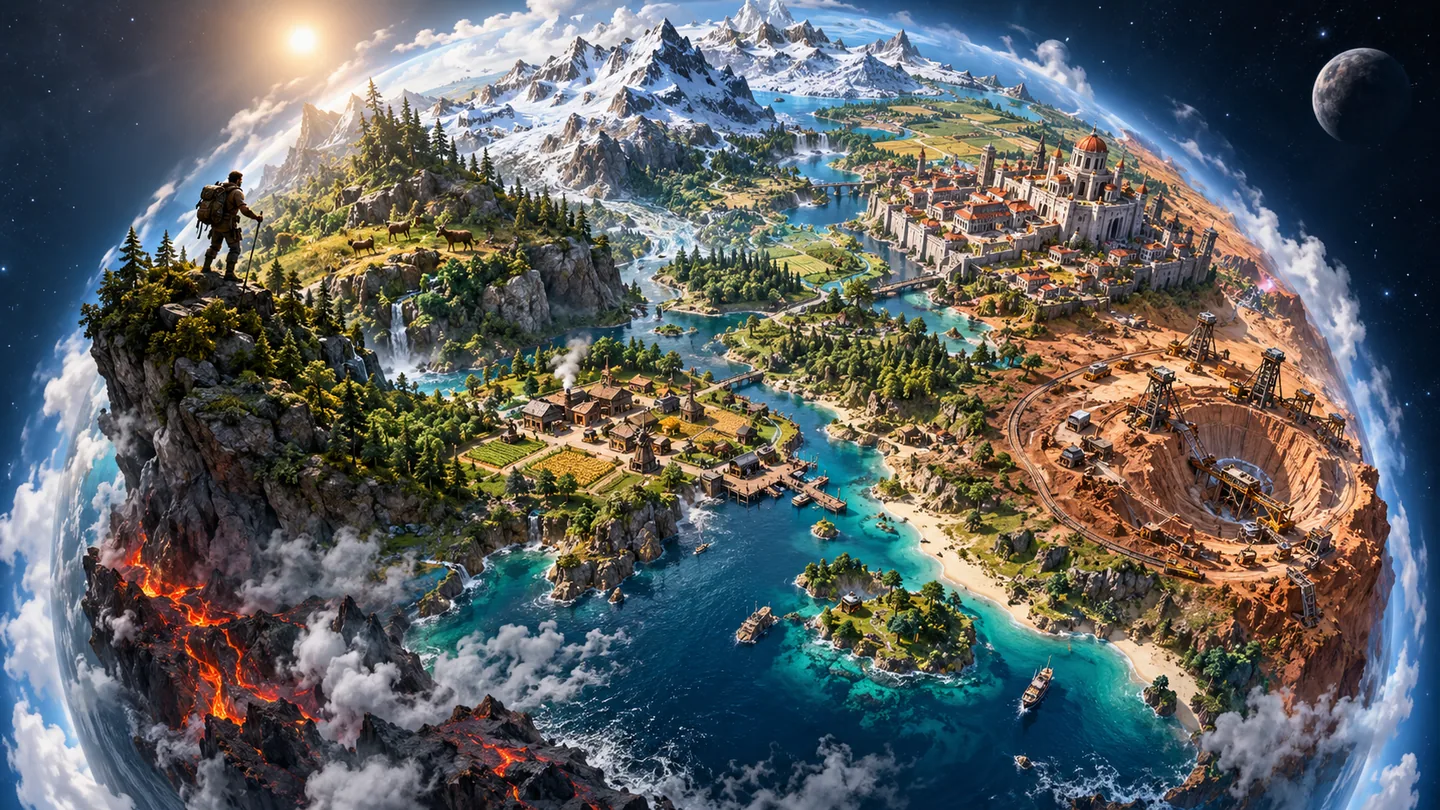
And especially:
Worldsmith is for the developer who has already said:
"I'll just make the world round."
I know what happens next.
I have been there.
The Real Product Is Time
This is probably the most practical part of the entire article.
I can talk about cube spheres.
Streaming.
Gravity.
Precision.
Hydrology.
Atmosphere.
Simulation.
But none of those things matter because they sound technically impressive.
They matter if they save development time.
That is the product value.
Game development eats time like almost nothing else.
You can lose a week solving something that will eventually become a checkbox nobody thinks about.
You can lose months building foundational systems before your actual game is even allowed to begin.
That is the part Worldsmith needs to attack.
If Worldsmith saves a developer three months of planetary groundwork, that matters.
If vegetation can be populated intelligently in minutes instead of days, that matters.
If terrain deformation already understands streaming, that matters.
If gravity already understands the sphere, that matters.
If a developer can spend more time on their game and less time rebuilding spherical-world infrastructure, that matters.
That is the test.
Not:
"Does this feature sound cool?"
But:
"What work does this actually remove?"
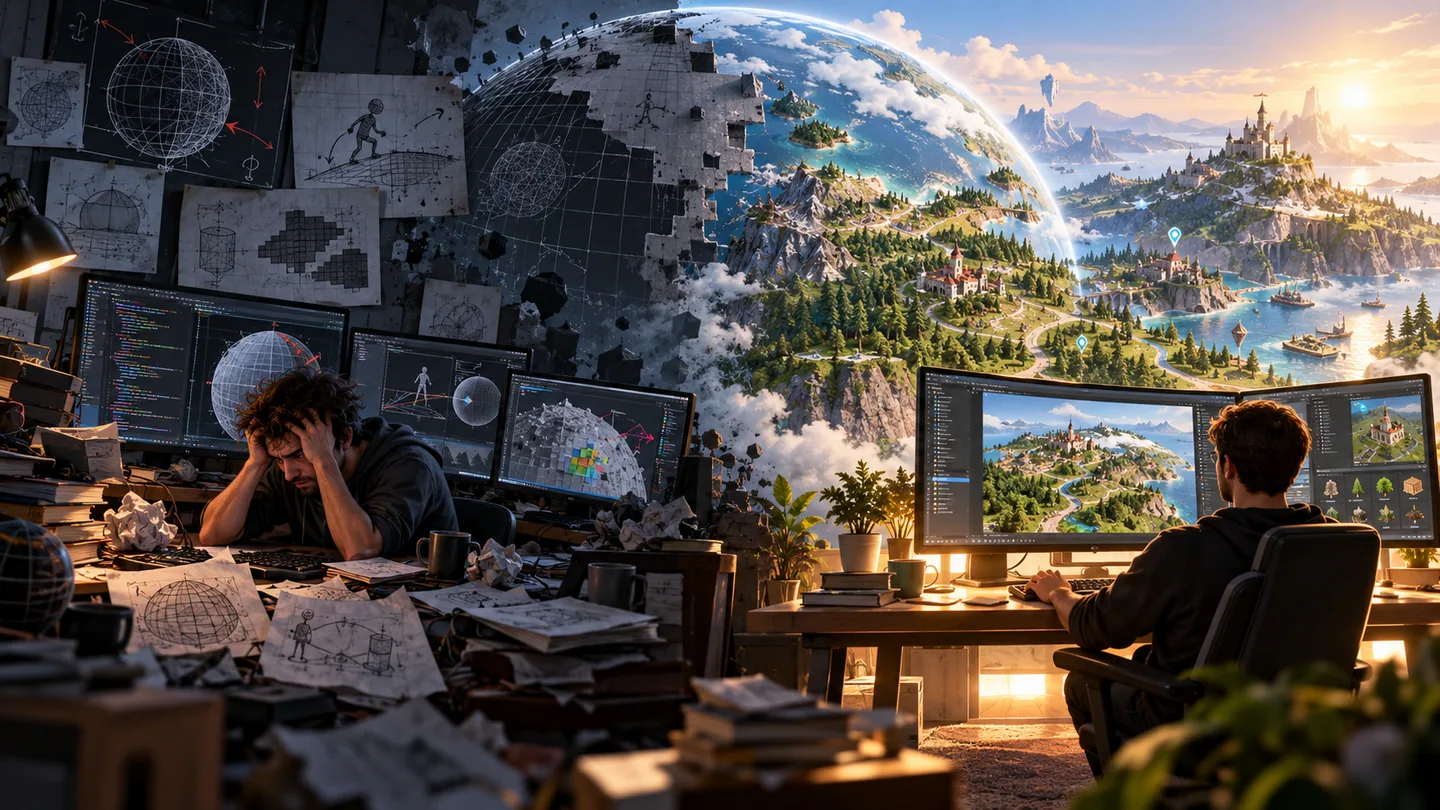
That question is also what stops Worldsmith from becoming a random pile of features.
Every new system has to earn its place.
Water belongs because planetary water is difficult.
Roads belong because curved terrain changes how they behave.
Vegetation belongs because manually populating a globe is ridiculous.
Persistence belongs because a mutable world that forgets itself is useless.
Simulation belongs when it helps developers create world-scale behaviour without rebuilding the foundation from zero.
That is a much stronger reason for Worldsmith to expand than simply saying:
"More features equals more value."
Sometimes more features just equals more tabs.
I don't want more tabs.
I want less work between the developer and the game they are trying to build.
Early Access Means the Machine Is Still Growing
Worldsmith is still being actively developed.
There is no point pretending otherwise.
There are systems already there.
There are systems being improved.
There are systems that exist as foundations.
And there are ambitious systems that are still roadmap territory.
I actually think Early Access makes sense for a tool like this because the product has a clear core but a huge amount of room to deepen.
Surface rendering can improve.
Terrain authoring can improve.
Water can improve.
Hydrology can become much deeper.
Cliffs can become smarter.
Vegetation can become richer.
Roads can become more connected.
Construction can grow.
Weather can grow.
Wind can grow.
Simulation can grow.
Celestial data can come later.
Gameplay integrations can expand.
There is a lot left.
And I would rather say that clearly than market a future idea as if I finished it last Tuesday.
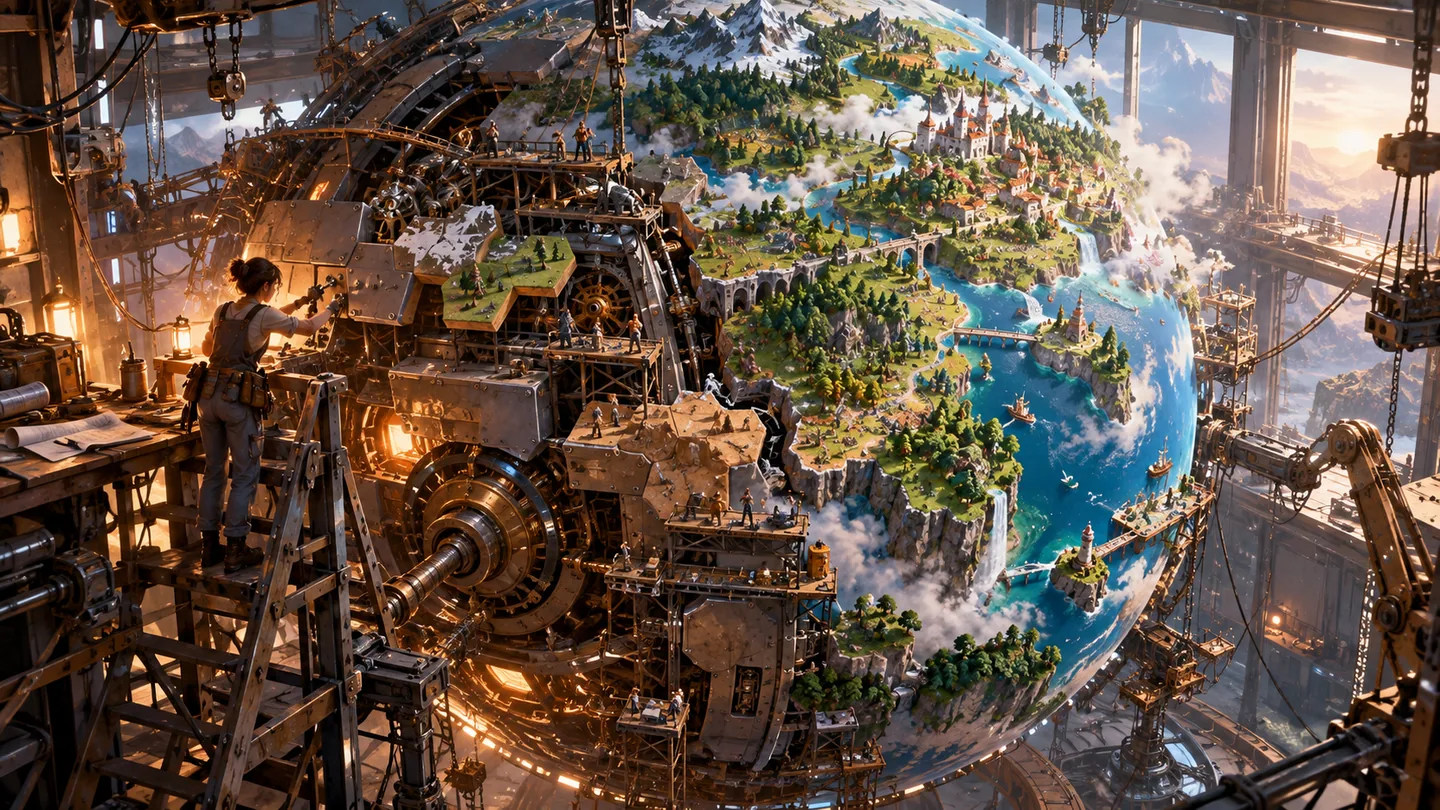
I also want users of Worldsmith to influence that development.
Because somebody building a colony sim will discover pain points I won't discover while building an exploration game.
Somebody building a small stylised planet will care about different things from somebody building a huge procedural survival world.
That's useful.
Tools become better when reality starts attacking the assumptions behind them.
And reality is very good at that.
Building Tools Is Weirdly Personal
Something I have realised from building Unity tools is that the user experiences your decisions directly.
In a game, players interact with the final experience.
With a development tool, the developer interacts with the decisions you made while building the experience.
Every unnecessary click becomes their unnecessary click.
Every bad workflow becomes their bad workflow.
Every confusing label wastes their time.
Every system that only works under perfect test conditions becomes their bug report.
That makes tool development very personal.
And it is another reason Worldsmith keeps changing.
I use it.
I get annoyed by it.
Then I change it.
There is probably no more honest feedback system than repeatedly irritating yourself with your own product.
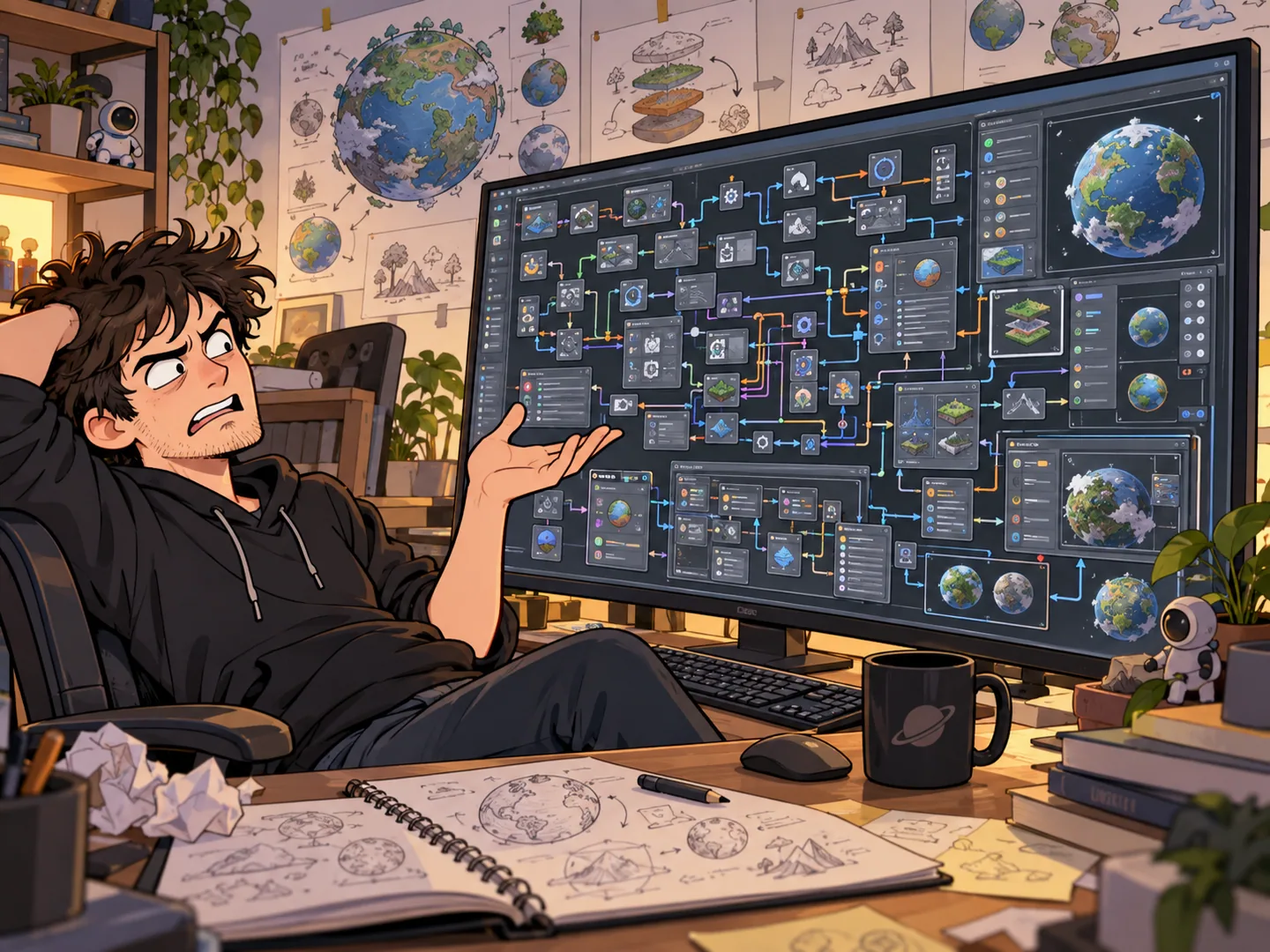
Worldsmith exists because I kept being annoyed.
The round mesh wasn't enough.
The workflow wasn't enough.
Manual population wasn't enough.
The AI workflow wasn't good enough.
The architecture wasn't always good enough.
Every time the project failed me, I had another decision:
Accept it.
Or push the tool further.
So far I keep choosing the second one.
This may be a character flaw.
Useful one, though.
From Planet Generator to Planet Framework
This is the part where the definition of Worldsmith has changed most for me.
At the beginning, success meant:
Generate convincing spherical terrain.
Now that feels like the first layer.
A planet framework has to answer more than:
"Can the terrain exist?"
It has to answer:
Can gameplay rely on it?
Can other systems query it?
Can the world change?
Can those changes persist?
Can regions stream?
Can atmosphere and gravity understand the same planet?
Can roads, water and vegetation use the same underlying information?
Can higher-level systems build on top without every feature reinventing what “planet” means?
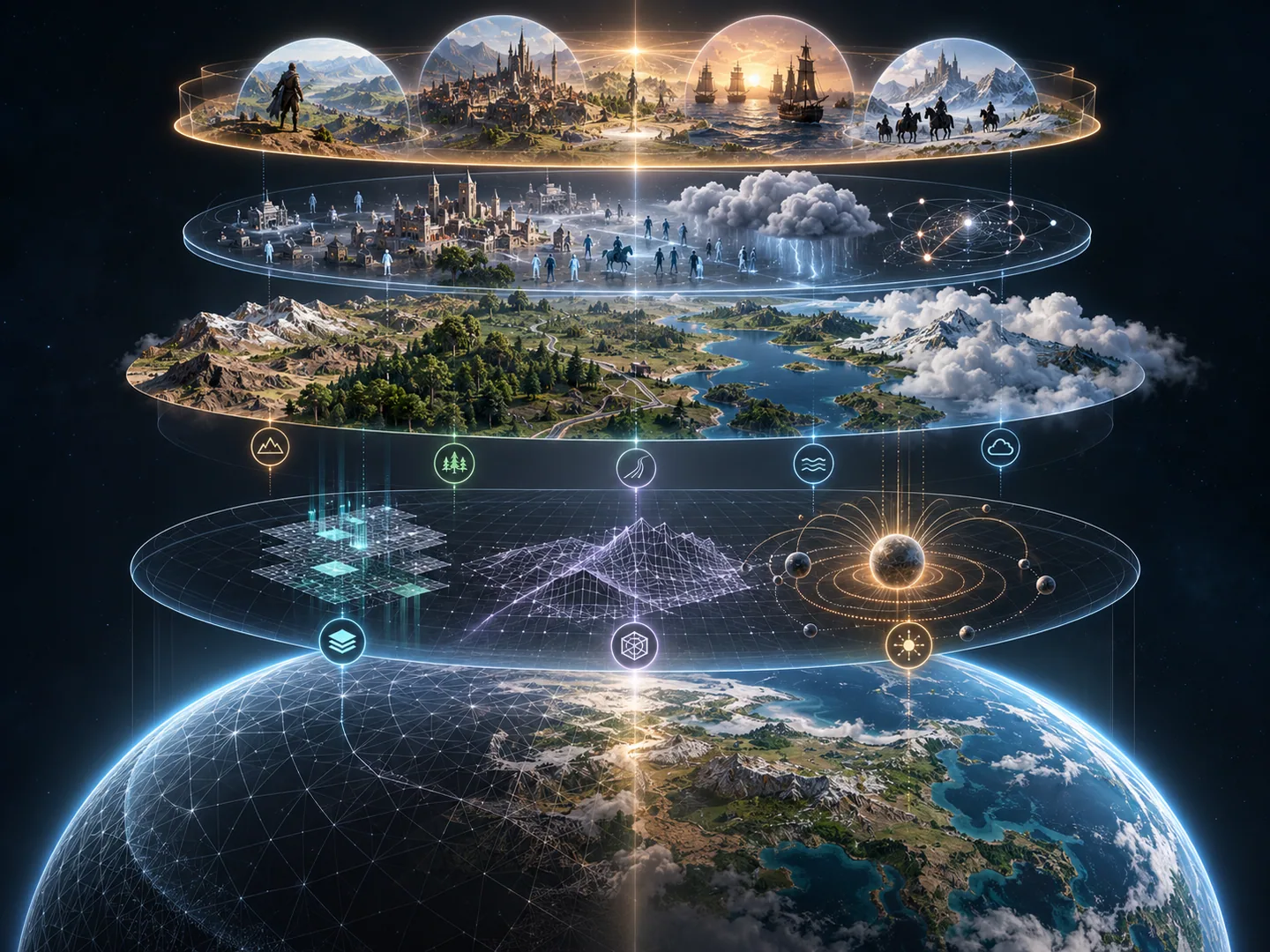
That is why I no longer think of Worldsmith as a terrain tool with extras.
The important change is architectural.
The systems are supposed to become planet-aware services that other gameplay systems can build on.
That is a much bigger idea than generating a sphere.
And, for me, a much more useful one.
And Yes, The Ambition Is Still Ridiculous
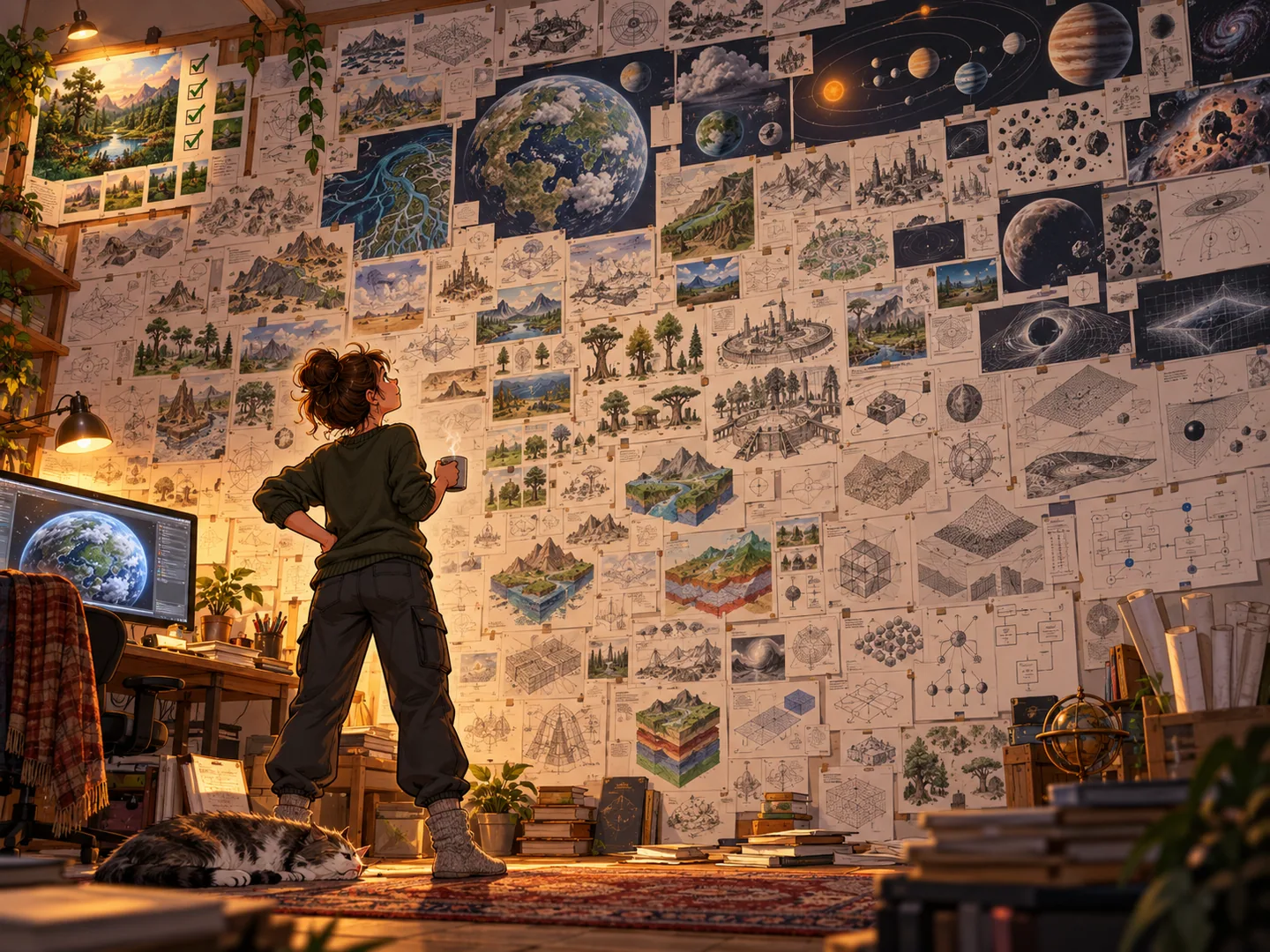
I haven't suddenly become reasonable.
I still think about deep weather systems.
Wind.
Hydrology.
Better geological generation.
Population.
Disasters.
Economies.
World state.
Better construction.
Real celestial terrain.
More intelligent procedural systems.
Ways different systems can talk to each other.
Ways AI could potentially assist the developer without hijacking their creative decisions.
Ways to make the planet feel less like generated content and more like a world with logic.
Will every idea make it in?
Probably not.
Some will be stupid.
Some will turn out to be too expensive.
Some will change.
Some will be replaced by better ideas.
That is development.
But I would rather have the ambition and cut intelligently than start with no ambition because I am afraid of complexity.
Worldsmith literally exists because I refused to accept:
"Well, making an entire planet is difficult."
Yes.
I noticed.
Let's make it less difficult.
From World 001 to Whatever Comes Next
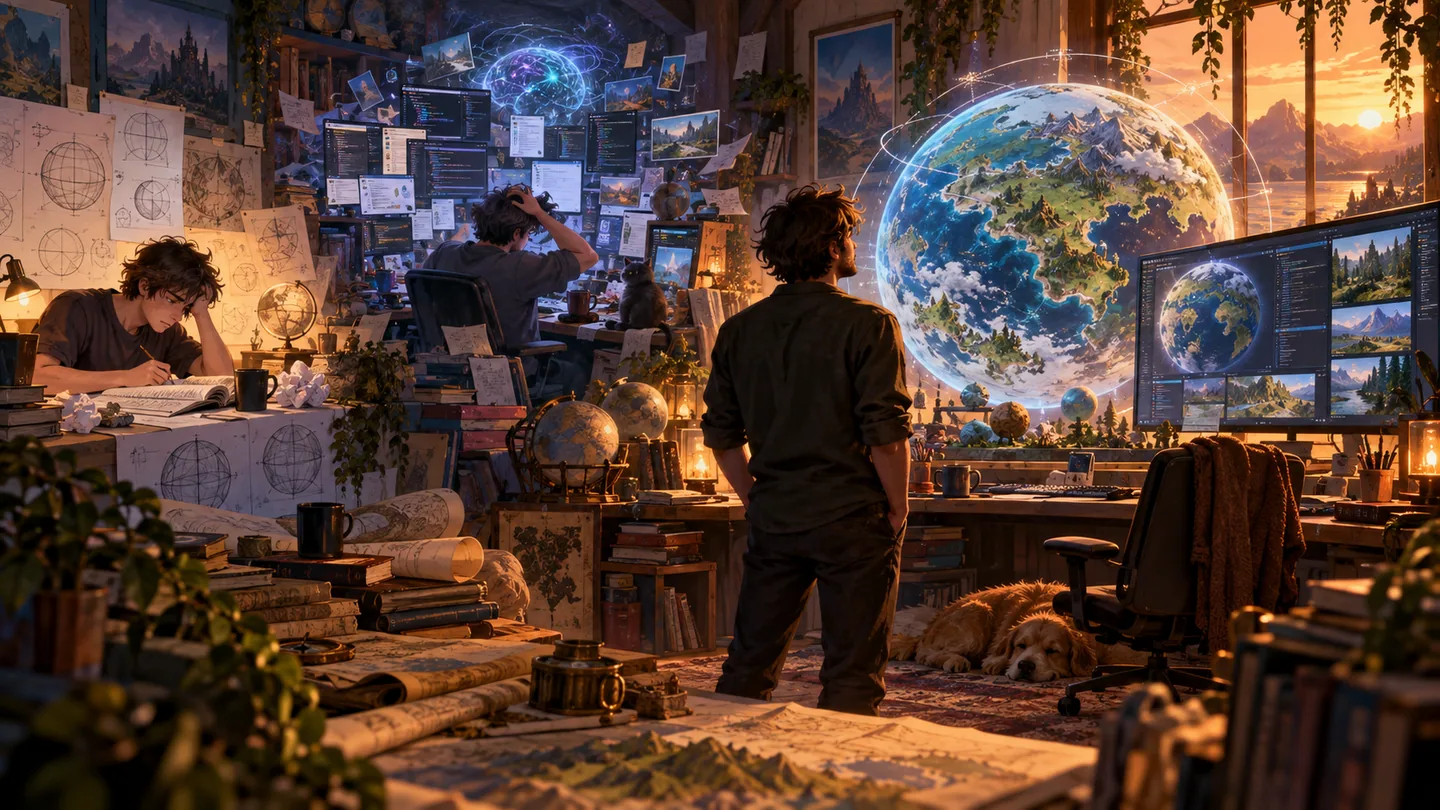
Sometimes I think about the first version of this project.
If you showed that version of me what I am trying to make now, I think my reaction would go through several stages.
First:
"That's sick."
Then:
"Wait, I'm making all of that?"
Then probably:
"Why?"
Fair question.
But the answer is still the same one that kept Worldsmith alive through all the abandoned versions, rewrites, maths problems, AI arguments and moments where I wanted to throw the whole thing away.
I need this.
I still want to make World 007.
I still want to create the kind of game world that made me start this nonsense in the first place.
And if I need all of this technology anyway, then I might as well build it in a way that another developer can use too.
That's what turned the personal tool into a product.
Not some market spreadsheet.
Need.
Then frustration.
Then:
"Surely I can make this better."
A dangerous sentence.
And one thing I am actually grateful for is that the project took this long.
I know that sounds stupid.
Obviously I would also enjoy having finished it instantly and becoming rich on Tuesday.
But the long development changed the product.
If I had released the first version the moment the round terrain worked, Worldsmith would have been a much smaller idea.
The frustration made it larger.
The mistakes made the workflow better.
Vibe coding taught me what kind of AI development I absolutely do not want.
Using the tool taught me which problems are real.
Thinking about World 007 kept the product grounded in an actual game-development need.
All of that changed what Worldsmith means to me.
I Don't Want to Sell You a Sphere
This is probably the cleanest way I can explain the product now.
I don't want to sell a sphere.
Unity can render a sphere.
You can make a sphere.
There are tutorials for spheres.
A sphere is not worth all this suffering.
What I want to build is the layer between:
“I want my game to happen on a real round planet.”
and
“Okay. Now I can actually start making that game.”
That gap is enormous.
Terrain generation is inside that gap.
So is streaming.
Gravity.
Precision.
Deformation.
Vegetation.
Roads.
Water.
Atmosphere.
Construction.
Simulation.
Persistence.
Weather.
Hydrology.
Data import.
And probably several problems I haven't even met yet.
That is where the value of Worldsmith lives.
Not in one feature.
Not in one button.
Not in one technically impressive mesh.
The value is in shrinking that gap.
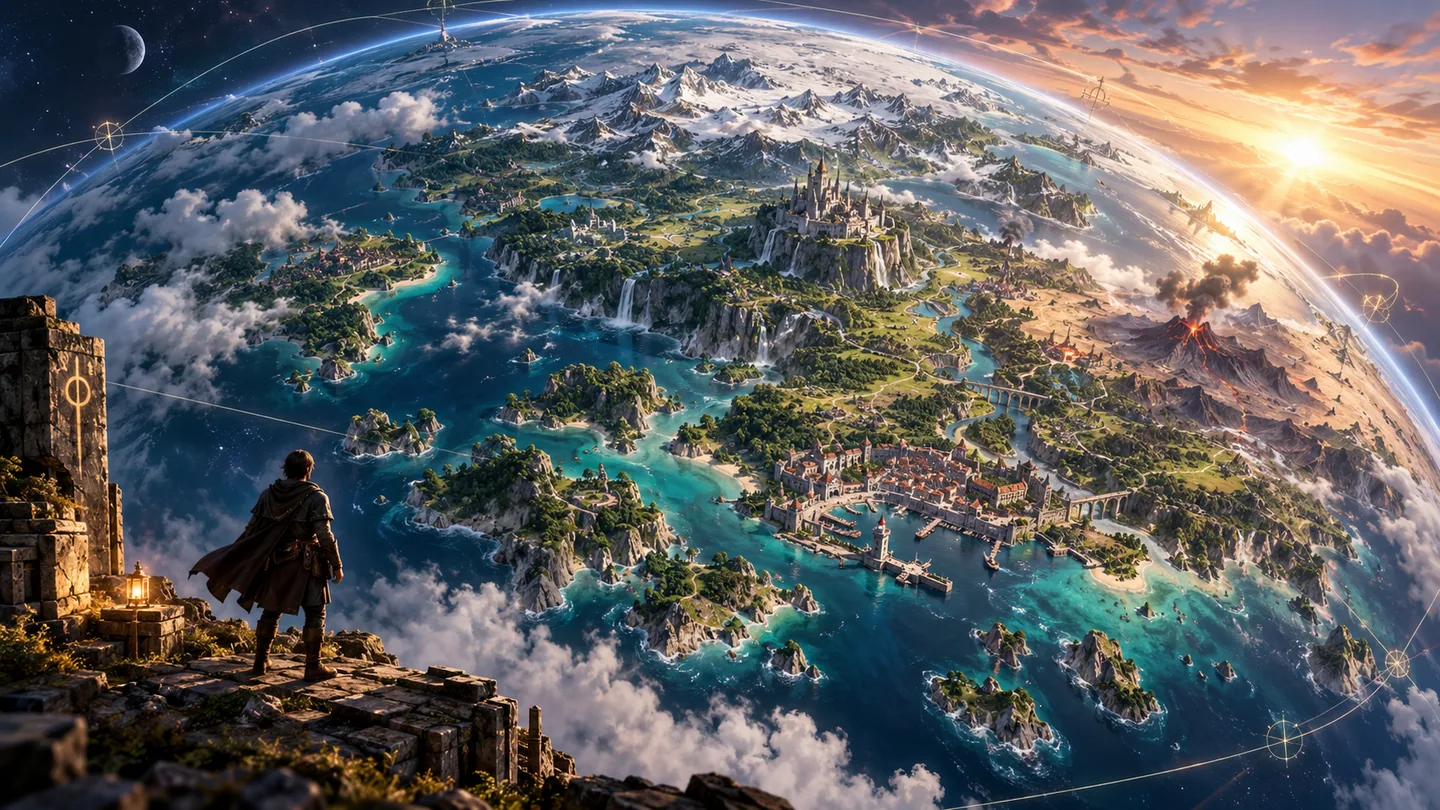
Worldsmith started because I wanted to build worlds that are actually worlds.
Round.
Playable.
Editable.
Persistent.
Populated.
Alive where the game needs them to be alive.
And practical enough that creating one doesn't consume the entire lifetime of the person who had the stupid idea to make a game on a planet.
I still have a long way to go.
That's fine.
I know what I am building now.
And unlike the early days, when I was mostly fighting the mathematics and hoping a usable tool would eventually fall out of it, I have a much clearer rule:
If Worldsmith doesn't save the developer meaningful time, it isn't finished solving that problem yet.
That applies to me too.
Especially me.
Because when World 007 eventually starts properly taking shape, I don't want to spend my time manually placing tree number 14,633.
I don't want to spend another month teaching a road that the ground is curved.
I don't want to build gravity again.
I don't want to solve the same planetary foundation before I am finally allowed to work on the game I wanted in the first place.
I want Worldsmith to have already taken care of that layer.
So I can make the game.
And if it can do that for me, then hopefully it can do the same for somebody else who had the equally questionable idea of building an entire world on a sphere.
That is where Worldsmith is going.
The planet is only the beginning.